LM2596 Buck Converter: Adjustable vs Fixed 5V — Which Should You Buy?
LM2596 Buck Converter: Adjustable vs Fixed 5V - Which Should You Buy?
The LM2596 is one of the most popular step-down (buck) switching regulators ever made. But when you go to buy one, you face a fork: LM2596S-ADJ (adjustable output) or LM2596-5.0V (fixed 5V output). They cost about the same. They share the same pinout. But picking the wrong one adds extra components, unnecessary BOM cost, or a second design spin.
This guide tells you exactly which version fits your production run.
Quick Answer - Adjustable or Fixed?
| Your Need | Buy This Version | Why |
|---|---|---|
| Prototyping / unknown Vout | LM2596S-ADJ | Vout adjustable from 1.23V to 37V with two resistors |
| Production 5V rail (≥500 units) | LM2596-5.0V | Fewer external components, tighter regulation, lower BOM cost |
| Multiple prototypes, one BOM | LM2596S-ADJ | One PCB layout populates different feedback networks per build |
| Fast time-to-market | LM2596-5.0V | No feedback divider to calculate, verify, or source |
Bottom line: For one-off designs and prototyping, buy ADJ. For production at scale with a 5V rail, the fixed version saves money and reduces failure points.
Key Differences at a Glance
| Parameter | LM2596S-ADJ | LM2596-5.0V |
|---|---|---|
| Output Voltage | 1.23V–37V (set by R1/R2) | 5.0V ± 4% fixed |
| Feedback Reference | 1.23V (VREF) | Internal divider, no FB pin |
| External Resistors Needed | 2 (R1, R2, typically 1% tolerance) | 0 |
| Max Input Voltage | 40V | 40V |
| Max Output Current | 3A (peak) | 3A (peak) |
| Switching Frequency | 150 kHz | 150 kHz |
| Efficiency (typical) | 75–85% | 77–85% |
| Package | TO-263 / TO-220 | TO-263 / TO-220 |
When to Buy LM2596S-ADJ
Scenario 1: You Don't Know the Final Voltage Yet
If your design is still in the breadboard phase and the rail voltage might change, use ADJ. Swapping two resistors is cheaper than spinning a new PCB.
Real example: A customer designing a variable bench power supply uses LM2596S-ADJ with a potentiometer to sweep Vout from 1.25V to 24V. The fixed version would be useless here.
Scenario 2: One PCB, Multiple Product Variants
If your hardware platform ships in 3.3V, 5V, and 12V variants, use LM2596S-ADJ. One PCB layout, three different feedback resistor value pairs, three SKUs. The fixed version would require three separate PCB spins.
Scenario 3: Non-Standard Voltages
Need 3.8V for an LTE module? 6.5V for a motor driver? 9V for a valve actuator? The ADJ version can produce any voltage from 1.23V to 37V. The fixed version only gives you 5.0V.
ADJ Version Design Checklist
| Component | Typical Value | Notes |
|---|---|---|
| R1 (feedback top) | 1kΩ–10kΩ | Lower = better noise immunity, higher quiescent loss |
| R2 (feedback bottom) | Calculated: R2 = R1 × (Vout/VREF − 1) | VREF = 1.23V |
| Inductor L1 | 33 µH (12V→5V @ 3A) | Use LM2596 datasheet nomograph |
| Input cap Cin | 100 µF (low ESR, 50V rated) | Mandatory for stability |
| Output cap Cout | 220 µF (low ESR, 25V rated) | ESR 0.1–0.3Ω required |
| Schottky diode D1 | 5A/40V (e.g., 1N5825, SS54) | Keep traces short |
When to Buy LM2596-5.0V
Advantage 1: Lower BOM Count
The fixed version eliminates two resistors. In a run of 10,000 boards, that's $200–$500 saved, plus one fewer component to place on the pick-and-place machine.
Advantage 2: Tighter Regulation (±4% total)
The fixed version's internal voltage divider is laser-trimmed. The ADJ version's accuracy depends on your external resistor tolerance - up to ±4.5% total with 1% resistors. The fixed version guarantees ±4% over line, load, and temperature.
Advantage 3: One Less Failure Point
Oscillation caused by poor feedback layout is the #1 field failure mode in LM2596 designs. The fixed version eliminates the feedback PCB trace entirely.
Cost Comparison
| Scenario | ADJ Version (Total) | Fixed 5V Version (Total) | Winner |
|---|---|---|---|
| Single unit (prototype) | $1.25 | $1.10 | Fixed (saves $0.15) |
| 100 units (pilot run) | $0.88/unit | $0.78/unit | Fixed (saves 11%) |
| 10,000 units (mass production) | $0.57/unit | $0.50/unit | Fixed (saves 12%) |
| Variable output required | ADJ only choice | N/A | ADJ |
Application Fit Guide
| Application | Recommended | Reasoning |
|---|---|---|
| 12V→5V USB charging port | Fixed 5V | Standard 5V rail, no adjustment ever needed |
| Variable bench power supply | ADJ | Need 1.25V–24V sweep |
| 24V→12V intermediate bus | ADJ | Set Vout=12V with resistors |
| Automotive 12V→3.3V MCU rail | ADJ | Set Vout=3.3V (no fixed 3.3V in LM2596 family) |
| Router/switch 12V→5V at 2A | Fixed 5V | High volume, stable rail, lowest BOM |
Critical Buying Checklist
- Is Vin ≤ 40V? - For 48V systems, use LM2596HV (60V rated)
- Is your load ≤ 3A continuous? - At 3A, add copper pour or heatsink
- Do you have the inductor? - Use datasheet nomograph (33–100 µH)
- Schottky diode selected? - Use 40V–60V Schottky rated at ≥1.3× Iout
- Output capacitor ESR? - Use low-ESR electrolytics (ESR=0.1–0.3Ω). Don't use all-ceramic
FAQ
Q1: Can LM2596S-ADJ be used as a fixed 5V output?
Yes - set R1=10kΩ, R2=3.3kΩ for ~4.96V output. But for production, buy the fixed 5V version - it's cheaper and eliminates the divider components.
Q2: Efficiency difference between ADJ and Fixed?
At 5V from 12V input, both achieve ~82% efficiency at 1A. The ADJ version's feedback divider adds ~0.1% loss at light loads - negligible.
Q3: What happens if ADJ feedback pin floats?
The output will rise to Vin − Vdropout (≈35V on 12V input). This will almost certainly damage the load. Never power ADJ without the feedback divider.
Q4: Can I use LM2596-5.0V as 3.3V?
No. If you need 3.3V, use the ADJ version or a dedicated 3.3V regulator.
Q5: Maximum input voltage?
40V (standard), 60V (LM2596HV). For 48V telecom, use the HV series.
Q6: How hot at 3A?
Approximately 18W dissipation at 12V→5V. Requires good heatsinking - TO-220 tab to chassis or large copper pour on TO-263.
Q7: Where to buy genuine LM2596?
ICMASS stocks both versions with traceable batch numbers and competitive volume pricing.
Final Verdict - ICMASS Recommendation
| Scenario | Buy This |
|---|---|
| One-off prototype or breadboard | LM2596S-ADJ |
| Production board with 5V rail (≥500 units) | LM2596-5.0V |
| Non-5V output needed (3.3V, 12V, etc.) | LM2596S-ADJ |
| Quick-turn prototype to production | Start ADJ → switch to Fixed |
Internal Links
- LM2596S-ADJ - Adjustable Buck Converter, 3A, TO-263
- LM2596-5.0V - Fixed 5V Buck Converter, 3A, TO-263
- AMS1117 vs LM2596 vs LM317 - Full Comparison
- A Brief History of Switching Regulators
- Buck Converter Design Guide
- Browse All DC-DC Converters
Product comparison guide by ICMASS - your sourcing partner for power management ICs.
Related information
-
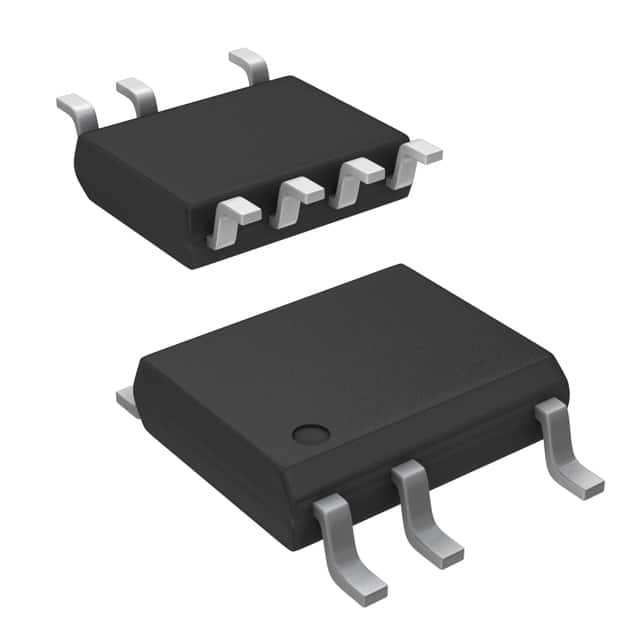
LNK304DN-TL Power Integrations
-
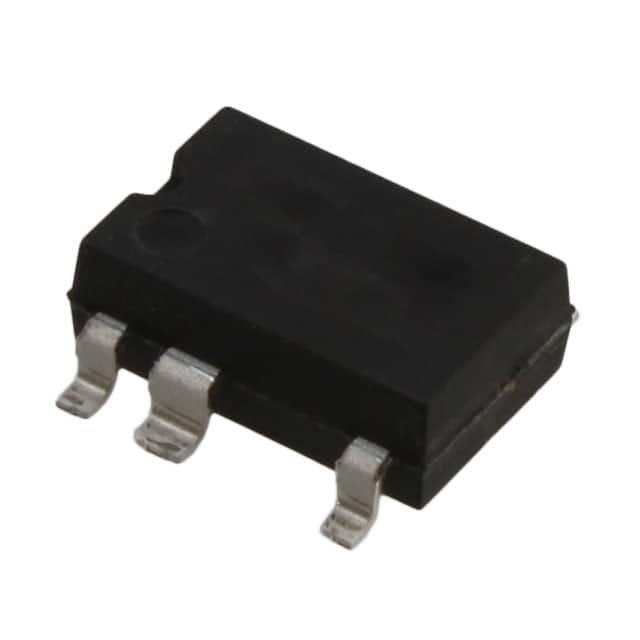
LNK304GN-TL Power Integrations
-
LNK304DG-TL Power Integrations
-
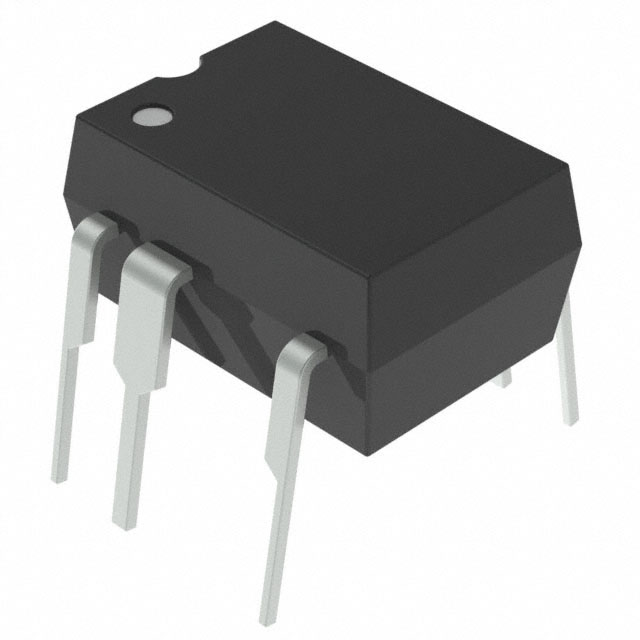
TNY277PN Power Integrations
-
TNY276PN Power Integrations
-
TNY278PN Power Integrations
-
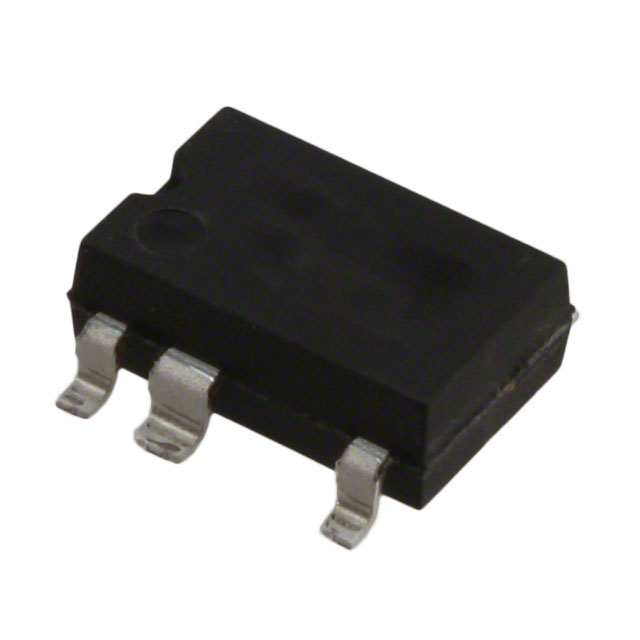
TNY278GN-TL Power Integrations
-
TNY280GN-TL Power Integrations
-
TOP266KG-TL Power Integrations
-
TOP258PN Power Integrations
-
TOP253PN Power Integrations
-
TOP253PNAU Power Integrations

- 1500+ Daily average RFQ Volume

- 20,000.000 Standard Product Unit

- 1800+ Worldwide Manufacturers

- 15,000+ In-stock Warehouse