LinkSwitch vs TinySwitch vs TOPSwitch — Which One for Your Power Supply?
Power Integrations Chip Selection: LinkSwitch vs TinySwitch vs TOPSwitch -- Which One for Your Power Supply?
The answer is actually simpler than most people make it. Three questions, asked in order.
I've watched engineers spend hours comparing PI datasheets -- and I've read the same discussions on the Power Integrations community forum and dianyuan.com that go in circles. The decision really comes down to this:
- Do you need galvanic isolation? --> No: LinkSwitch-TN. Yes: keep going.
- How many watts? --> Under 20W: TinySwitch-III. Over 20W: keep going.
- Are you bolting this to a metal chassis? --> Yes: TOPSwitch-II in TO-220. No: TinySwitch-III or consider TOPSwitch-GX.
That's the 30-second version. But I want to go deeper -- because the "why" behind each answer is where you avoid designing yourself into a corner, and some of the most useful insights come from engineers who've been designing with these parts for 20 years.
Before We Start: A Word on PI's Product Line Evolution
If you last looked at PI's catalog in 2015, the landscape has changed. The three families I'm covering here -- LinkSwitch-TN, TinySwitch-III, and TOPSwitch-II -- are the ones engineers most frequently ask us about at ICMASS. They cover the sub-100W through-hole space that still dominates repair, maintenance, and cost-sensitive production.
But PI hasn't stood still. TinySwitch-5, released recently, pushes the TinySwitch name all the way to 175W -- territory that used to belong exclusively to TOPSwitch. TOPSwitch-GaN hits 440W with gallium nitride. And InnoSwitch, which sits above all three in PI's lineup, integrates the secondary-side controller and synchronous rectification into one package, achieving efficiency numbers that the older families can't touch.
For new designs above 20W, PI's own recommendation -- and the consensus on their community forum -- is to use PI Expert, their free design software. You input your spec, and it picks the optimal family and generates a complete transformer design. The days of manually cross-referencing datasheets for new projects are largely over.
Now, back to the three families you actually encounter in the real world.
LinkSwitch-TN: The Buck Converter You Reach for When Nobody Needs to Touch It
LinkSwitch-TN is PI's non-isolated specialist. DIP-7. 700V MOSFET. 66kHz. 120mA output in the LNK304 -- the LNK306 pushes to 360mA.
On the PI community forum, a PI applications engineer described the family difference succinctly: LinkSwitch uses primary-side feedback (PSR) -- no optocoupler needed. That's the architectural distinction that drives everything else. No optocoupler means no isolation boundary to cross. No isolation boundary means you're doing buck conversion, not flyback.
The BOM for a LinkSwitch-TN buck converter is basically: one chip, one inductor, one freewheeling diode, two feedback resistors, two caps. That's the entire power stage. No transformer to wind. No RCD clamp to tune. No bias winding to add.
When this makes sense:
Appliance control boards. Your washing machine's MCU sits inside a plastic enclosure behind a sealed panel. The user never touches the board. A non-isolated buck from 230VAC to 12VDC at 50mA isn't a cost-cutting compromise -- it's the correct engineering call. The PI community discussion confirmed this: LinkSwitch is positioned as the "linear power supply killer" -- replacing 50/60Hz transformer-based supplies in cost-sensitive high-volume products.
Smart meters and IoT endpoints. Sealed for a decade. The LinkSwitch-TN's cycle-skipping ON/OFF control naturally draws ~50mW at no-load. No burst-mode firmware, no special standby mode -- the chip just stops switching when there's no load. As one dianyuan.com engineer put it: "LinkSwitch is for things that spend 99% of their life waiting for something to happen."
Replacing capacitor droppers. If your existing design uses a 0.47uF X2 cap and a 7805, the LNK304PN buck adds perhaps $0.80 in BOM and cuts standby losses by 10x. The 2026 energy regulations are not getting looser.
The trap: using LinkSwitch-TN for flyback because the datasheet lists it as a supported topology. It works. TinySwitch-III does flyback so much better -- with proper UVLO, adjustable current limit, and a control scheme designed for the transformer's reflected voltage dynamics -- that forcing an LNK304 into flyback is a false economy.
TinySwitch-III: The Flyback Sweet Spot, and Why PI Engineers Say "Use ON/OFF Control"
TinySwitch-III is the isolated generalist. DIP-8C. 700V MOSFET. 132kHz -- double TinySwitch-II. 8.5W universal (TNY274), scaling to 19W (TNY278) in the same DIP-8C footprint.
Here's something the dianyuan.com engineers discussed that doesn't jump out from the datasheet: TinySwitch uses ON/OFF control, same as LinkSwitch, but with secondary-side optocoupler feedback. This combination -- ON/OFF regulation plus isolated feedback -- is what gives TinySwitch its sweet spot. The ON/OFF scheme eliminates loop compensation (no Type II/III compensator to design), and the optocoupler gives you proper isolated regulation. Contrast this with TOPSwitch's PWM current-mode control: more precise, better dynamic response, multi-output capable -- but you need to compensate the loop.
The BP/M pin: a three-position power switch. The capacitor on the BP/M pin sets the MOSFET current limit: 0.1uF = 250mA, 1uF = 275mA, 10uF = 300mA. This is genuinely useful in manufacturing. Same PCB, same TNY274PN footprint, three power levels by changing the BP/M cap value and the transformer. One layout, three SKUs.
The bias winding math. Without a bias winding, the TNY274PN self-biases from DRAIN -- no-load is ~150mW. Add a 6-turn bias winding and you're under 50mW. For CEC Level VI or EU CoC Tier 2, wind the turns.
The hiccup mode you want. Output shorted --> auto-restart kicks in: 50ms on, 800ms off. Average fault power ~3% of max. On a scope it looks like the supply is gasping. That's not broken. Clear the short, normal operation resumes. PI designed this behavior into TinySwitch-III for consumer products where the end-user might short the output by accident.
TOPSwitch-II: Three Pins, TO-220, and Why It's Still on Shelves in 2026
TOPSwitch-II is PI's first commercial product line, launched in 1994. TO-220-3. 700V MOSFET. 100kHz. 45W universal, 75W on 230VAC. Three pins: DRAIN, SOURCE, CONTROL.
On dianyuan.com, the consensus about TOPSwitch vs TinySwitch is clear: TOPSwitch uses PWM current-mode control with secondary-side feedback. TinySwitch uses ON/OFF control. TOPSwitch's PWM gives you better output accuracy, better dynamic response, and support for multiple output rails -- but you pay with loop compensation complexity and higher no-load consumption (the 100kHz oscillator never stops). TinySwitch's ON/OFF gives you simpler design and lower standby -- at the cost of slightly looser regulation and single-output optimization.
PI marks it "Not Recommended for New Designs." For new projects over 20W, use TOPSwitch-GX (TOP244YN), TOPSwitch-HX (TOP254EN), or jump to InnoSwitch if efficiency matters.
But here's what PI's official designation doesn't tell you: the TOP224YN is still in full production, and it's inside hundreds of thousands of TV power supplies, CRT monitors, and industrial SMPS designed between 1998 and 2015. If you're maintaining one of those products -- or stocking spares for field repair -- changing the power supply IC means re-certification. The TOP224YN costs a dollar. The re-certification costs thousands.
Latching thermal shutdown: it's a feature. TOPSwitch-II's thermal shutdown is latching -- die hits +135C, MOSFET turns off and stays off. You must cycle input power to reset. This was designed for TV power supplies in the 1990s where blocked ventilation meant "something is wrong, stay off." In an industrial cabinet with a failed fan, latching shutdown prevents the supply from cooking itself in 800ms cycles while nobody notices. If you want auto-recovery in TO-220, TOPSwitch-GX added it.
The Decision Flow, Updated with What the Community Actually Says
Here's the flow -- incorporating the PI community discussion and dianyuan.com engineer consensus:
Do you need galvanic isolation?
|-- No --> LNK304PN (LinkSwitch-TN). Buck. Done.
|-- Yes --> How many watts?
    |-- Under 3W --> Are you sure you need isolation?
    |   If yes --> TNY273PN
    |   If no --> LNK304PN
    |-- 3W-20W --> TNY274PN (or TNY273-TNY278)
    |   |-- If calc says 7-8W, use TNY275PN (11.5W). Headroom > specmanship.
    |-- 20W+ --> New design?
        |-- New --> PI Expert --> probably TOP244YN or InnoSwitch
        |-- Existing --> TOP224YN. Don't re-certify.
On switching frequency and noise. If your supply powers audio or precision analog, lean lower: LNK304PN (66kHz) or TOP224YN (100kHz) are easier to filter than TNY274PN (132kHz). Higher frequency shrinks magnetics but demands tighter layout discipline.
On counterfeit PI parts. TOPSwitch-II in TO-220 is the most counterfeited PI family -- a TOP222 or TOP223 die re-marked as TOP224 is the most common variant. It passes the test jig at half load and fails in the field. The dianyuan.com community has documented cases where the CONTROL pin voltage was off by 0.3V on fakes -- measurable with a multimeter before you even apply power. Buy from a source that can trace lot codes back to authorized PI distribution.
On when to ignore this entire article. If you're designing a new product above 20W, open PI Expert, type in your input voltage range, output voltage, and power level, and let it recommend the IC and generate your transformer spec. The software exists specifically because manually comparing PI families stopped being the optimal approach about five product generations ago. The three families covered here are what you'll encounter maintaining, repairing, and stocking existing designs -- and for those use cases, knowing the architectural differences matters more than any selection flowchart.
Related Products at ICMASS
Related information
-
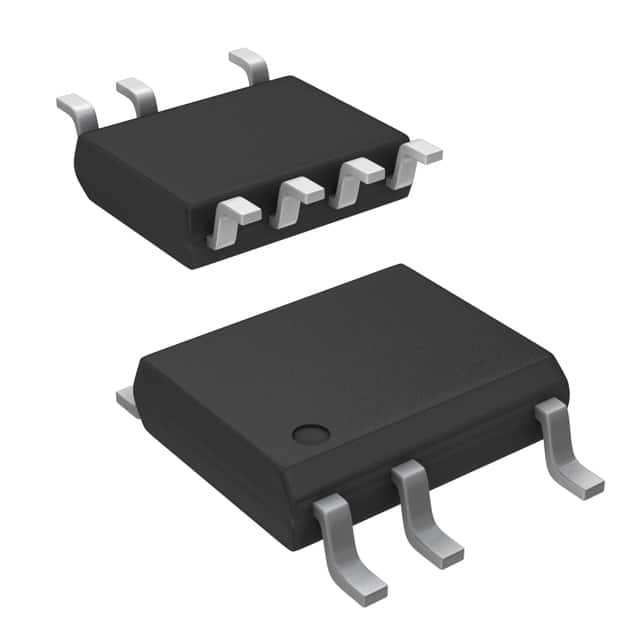
LNK304DN-TL Power Integrations
-
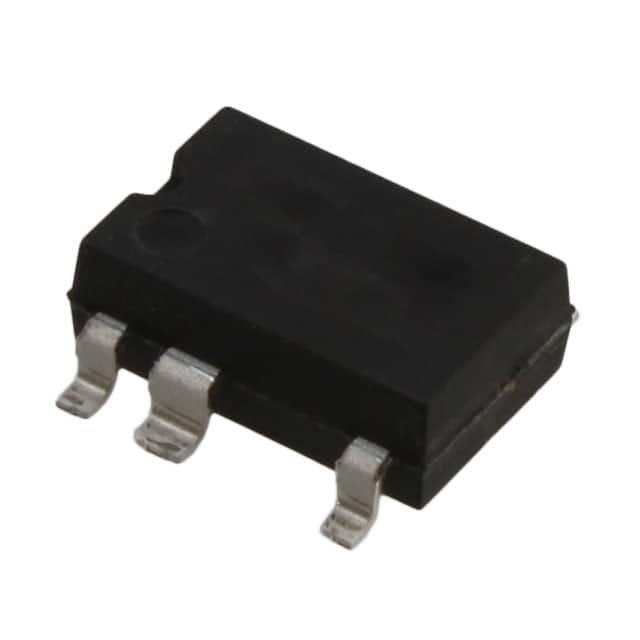
LNK304GN-TL Power Integrations
-
LNK304DG-TL Power Integrations
-
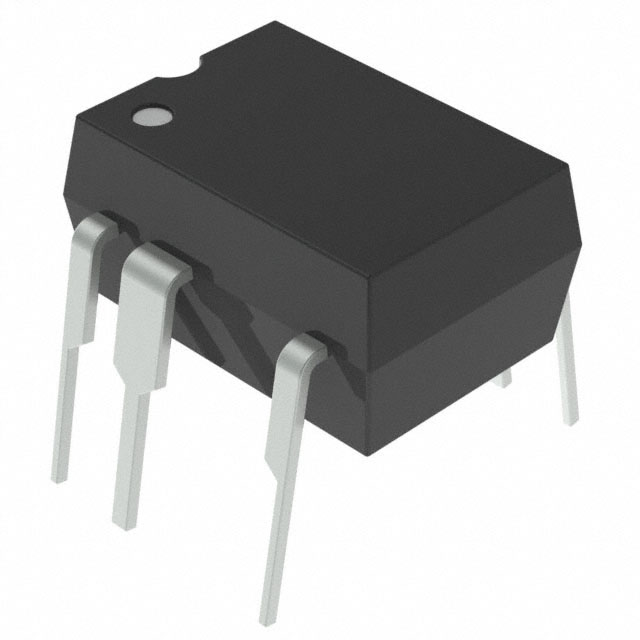
TNY277PN Power Integrations
-
TNY276PN Power Integrations
-
TNY278PN Power Integrations
-
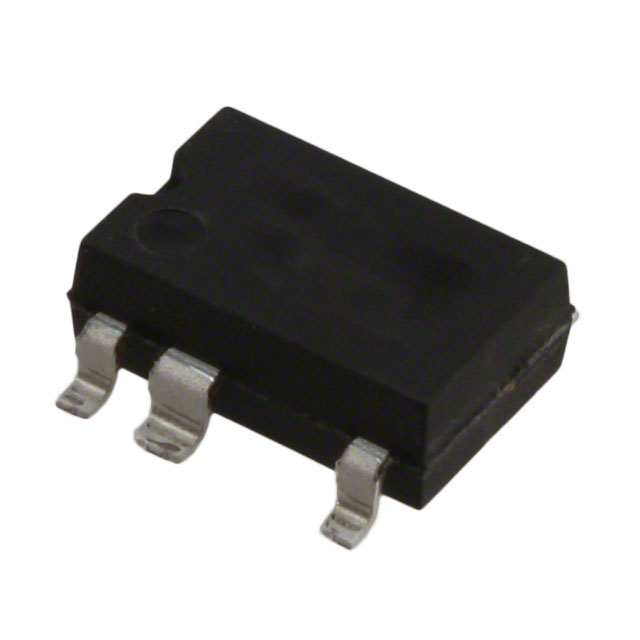
TNY278GN-TL Power Integrations
-
TNY280GN-TL Power Integrations
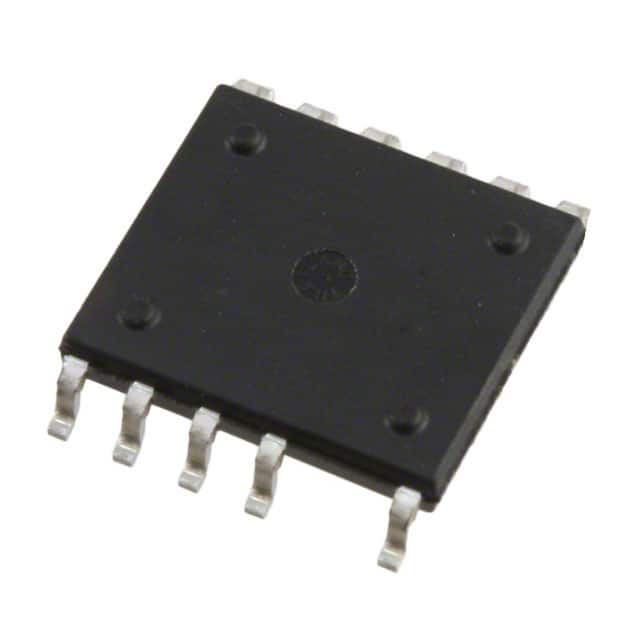
-
TOP266KG-TL Power Integrations
-
TOP258PN Power Integrations
-
TOP253PN Power Integrations
-
TOP253PNAU Power Integrations

- 1500+ Daily average RFQ Volume

- 20,000.000 Standard Product Unit

- 1800+ Worldwide Manufacturers

- 15,000+ In-stock Warehouse