When to Replace a Standard Diode with a Schottky — and When Not To
Here's a number that surprises most engineers: a Schottky diode can cut your rectifier power loss by 60% with a single BOM change. Here's another number: put the same Schottky in the wrong place and it can fail catastrophically before you've finished your morning coffee.
The difference between a standard silicon diode and a Schottky isn't just "one is faster." It's a fundamental trade-off between forward voltage and reverse leakage - and that trade-off plays out differently depending on your voltage, your current, your temperature, and whether you're rectifying, protecting, or OR-ing. Get the trade-off right, it's free efficiency. Get it wrong, it's thermal runaway.
From our Shenzhen distribution data (2025–2026), Schottky diodes now account for roughly 35% of all diode shipments we process - up from maybe 20% five years ago. The growth is almost entirely in low-voltage power conversion (USB-C chargers, DC-DC modules, battery management boards). But we also see returns where someone dropped a 1N5819 Schottky into a circuit that really needed a UF4007 ultrafast - or worse, a plain 1N4007. This guide is about knowing which one belongs where.
Schottky vs Standard vs Ultrafast: Quick Comparison
| Parameter | Standard Silicon (1N4007, 1N4148) | Ultrafast Recovery (UF4007, MUR160) | Schottky (1N5819, SS34) |
|---|---|---|---|
| Forward Voltage (Vf) @ rated current | 0.6–1.1V | 0.8–1.2V | 0.15–0.45V |
| Reverse Recovery Time (trr) | 1–30 µs | 25–75 ns | <100 ps (effectively zero) |
| Reverse Leakage Current @ 25°C | <5 µA | <5 µA | 50–500 µA (100× higher) |
| Reverse Leakage @ 100°C | ~50 µA | ~50 µA | 5–50 mA (1,000× higher) |
| Typical Max Reverse Voltage (silicon) | 50–1,000V | 50–1,000V | 20–60V (rare above 200V) |
| Switching Loss at 100 kHz | Prohibitive | Low | Near zero |
| Junction Capacitance | Low | Low | Higher (larger die area) |
| Ruggedness (surge tolerance) | High | Moderate | Low - junction near metallization |
| Cost (SMA/SOD-123, volume) | $0.01–0.03 | $0.02–0.05 | $0.02–0.08 |
When a Schottky Wins - and Why It's Usually About Speed
DC-DC converter output rectification
This is where Schottkys earn their keep. In a buck converter running at 200 kHz, the freewheeling diode switches on and off 200,000 times per second. A standard 1N4007 with 2 µs reverse recovery would spend roughly 40% of each cycle in recovery - conducting in reverse, burning power, and generating EMI. The Schottky's recovery is essentially instant (<100 ps). The efficiency difference at 12V/2A output can be 8–12 percentage points. That's not a rounding error. That's the difference between a converter that runs cool and one that needs a heatsink.
Per the Wikipedia entry on Schottky diodes, the recovery speed advantage comes from the fact that Schottkys are majority-carrier devices - there's no stored charge to sweep out when the junction switches from forward to reverse bias. A standard p-n diode has to recombine minority carriers before it stops conducting, and that takes time.
Reverse polarity protection
A Schottky in series with the power input - anode to VIN, cathode to the load - protects against reversed input. When the input is connected correctly, the Schottky drops only ~0.3V. A standard diode drops ~0.7V. At 2A, that's 0.6W dissipation for the Schottky vs 1.4W for the standard diode. Over a product's lifetime in a sealed enclosure, that 0.8W difference matters. The PMOS-based reverse polarity protector (covered in our PMOS vs NMOS guide) beats both - but if you're sticking with a diode solution, the Schottky is the better thermal choice below 30V rails.
OR-ing power supplies (with caution)
When you need to combine two power sources - say, a wall adapter and a backup battery - Schottky diodes OR them together with lower voltage drop and less heat. But here's the asterisk: Schottky reverse leakage at elevated temperature can feed voltage from the active supply back into the inactive one. Wikipedia specifically calls this out: "the high reverse leakage current presents a problem, as any high-impedance voltage sensing circuit will see the voltage from the other power source through the diode leakage." If your battery charger IC senses battery voltage through the OR-ing diode, the leakage can fool it into thinking the battery is fully charged when it isn't. For OR-ing above 40°C ambient, ultrafast diodes (UF4007) are often the safer choice despite the higher forward drop.
When NOT to Use a Schottky - The Three Kill Zones
Kill Zone 1: High temperature + high reverse voltage
This is the thermal runaway trap. Schottky reverse leakage doubles roughly every 10–15°C rise in junction temperature. At 25°C, a 1N5819 leaks maybe 0.5 mA at 40V reverse. At 100°C, it leaks 20–50 mA. More leakage → more heat → higher temperature → more leakage. This feedback loop can run away in seconds when the diode is reverse-biased near its maximum voltage rating in a hot environment. The Rohm application note on rectifier diode selection explicitly warns: "the reverse current (IR, leakage current) is large and care must be taken since thermal runaway may occur." Nexperia has an entire engineering article dedicated to "Tackling thermal runaway in Schottky rectifiers" - that's how common and serious this failure mode is.
From what we see in returned parts at ICMASS (2025–2026), Schottky diodes failing short in output rectifier positions are overwhelmingly from designs where the diode's repetitive reverse voltage in operation exceeded 70% of its rated VRRM - and the ambient temperature inside the enclosure exceeded 50°C. The combination is lethal. Standard silicon diodes don't have this failure mode because their reverse leakage is orders of magnitude lower and doesn't have the same positive-temperature-coefficient runaway characteristic.
Rule of thumb: if your reverse voltage exceeds 60% of the Schottky's VRRM rating AND your ambient temperature exceeds 50°C, do the thermal math before committing. Or just use an ultrafast diode and accept the efficiency hit.
Kill Zone 2: High-voltage circuits (>100V)
Silicon Schottky diodes above 100V are rare and expensive. The physics works against them: to raise the reverse breakdown voltage, you need a less intimate metal-semiconductor contact - which increases the forward voltage, which defeats the purpose of using a Schottky in the first place. Wikipedia notes that standard silicon Schottky diodes are "typically 50 V or less," with 200 V considered "high."
If your circuit runs from a 120VAC or 230VAC rectified bus (170V or 325V DC respectively), you're not choosing between Schottky and standard - the Schottky simply doesn't exist at that voltage for a reasonable price. Use an ultrafast silicon diode (UF4007, MUR160, or SiC Schottky if you have the budget). SiC (silicon carbide) Schottky diodes reach 650–1700V but cost 5–20× more and have higher forward voltage (~1.4–1.8V), making them more like an ultrafast silicon diode with better switching - but not a drop-in for a standard silicon Schottky.
Kill Zone 3: High surge-current applications
Schottky diodes are less rugged than standard p-n junction diodes. The metal-semiconductor junction is physically closer to the surface metallization, and the device has lower thermal mass at the junction. When a 50A inrush surge hits a Schottky rated for 5A continuous, it's more likely to fail short than a standard diode of the same current rating. This matters in input rectifiers for power supplies with large input capacitors, automotive load-dump scenarios, and any circuit where the diode sees turn-on surges.
Per the Wikipedia entry: "Schottky diodes are less rugged" than power p-n diodes, and "can therefore dissipate less power than an equivalent-size p–n counterpart" - especially during reverse breakdown events. If your circuit has unpredictable surge currents (motors, solenoids, hot-plug events), standard or ultrafast diodes give you a wider safety margin. On the EEVblog forum, one repair discussion noted that "every failed diode I've ever seen was failed shorted" - and Schottkys, with their lower thermal mass at the junction, are disproportionately represented in those failure statistics.
The Middle Ground Nobody Talks About: Ultrafast Diodes
Between the Schottky (zero recovery, high leakage) and the standard diode (slow recovery, low leakage) sits the ultrafast diode - and it's underused. Parts like the UF4007 (1A, 1000V, 75ns trr) and the MUR160 (1A, 600V, 50ns trr) offer recovery times in the tens of nanoseconds - fast enough for most SMPS applications below 500 kHz - with reverse leakage comparable to standard diodes.
From our distribution data, the MURA series (MURA140, MURA220, MURA260) from ON Semiconductor has been steadily gaining share in applications that would traditionally default to Schottkys - specifically in flyback converter output rectification where the reverse voltage swings high enough to make Schottky leakage a concern. At 600V reverse rating with 25–50ns recovery and leakage in the microamp range, they solve the thermal runaway problem while being fast enough for all but the highest-frequency converters.
When we see an engineer buying both Schottkys and MURAs for what looks like the same BOM, we ask. The answer, more often than you'd think: "The Schottky kept dying in the hot-test chamber, so we switched to the MURA and it passed."
Decision Framework: Which Diode Where?
| Application | Recommended Diode Type | Why |
|---|---|---|
| DC-DC output rectification (<40V out, <60°C) | Schottky (SS34, 1N5819) | Lowest Vf + zero recovery = best efficiency |
| DC-DC output rectification (>40V out or >60°C amb) | Ultrafast (UF4007, MUR160) | Avoids thermal runaway at high reverse voltage/temp |
| Reverse polarity protection (<30V rail) | Schottky or PMOS FET | Schottky for simplicity, PMOS for lowest loss |
| Mains AC-DC bridge rectifier | Standard (1N4007) or Ultrafast | Schottky doesn't exist at 170V+ (or prohibitively expensive as SiC) |
| Flyback snubber / RCD clamp | Ultrafast (UF4007, MUR160) | Fast recovery needed, but voltage spikes exceed Schottky ratings |
| OR-ing diodes (low temp, <40V) | Schottky | Low Vf. Watch leakage at high temp. |
| OR-ing diodes (high temp, >40V) | Ultrafast | Leakage through Schottky will cause sensing errors |
| Freewheeling diode for relay/solenoid | Standard (1N4007, 1N4148) | Speed doesn't matter - only clamping voltage. Cheapest option wins. |
| Signal clamping / ESD protection | Schottky (BAT54S, 1N5819) | Low Vf clamps closer to the rail. Fast response. |
| High-frequency SMPS (>500 kHz) | Schottky (must check VRRM derating) | Ultrafast recovery still too slow. Schottky or SiC mandatory. |
| Solar panel bypass diode | Schottky | Low Vf during bypass = less heat on the panel. Reverse voltage is limited to panel Voc. |
| Automotive load dump | Standard or TVS | Surge ruggedness matters more than speed. Schottky is too fragile. |
Common Mistakes When Swapping Standard Diodes for Schottkys
Mistake 1: Assuming "Schottky = better" without checking voltage
The single most common error we see: an engineer replaces a 1N4007 (1000V) in a flyback primary snubber with a 1N5819 Schottky (40V). The flyback reflected voltage plus the leakage spike pushes 150V+ across the diode. The Schottky avalanches on the first switching cycle and fails short. Always check the peak reverse voltage in your circuit - including transients - before choosing a Schottky.
Mistake 2: Ignoring the temperature coefficient of leakage
Design works on the bench at 25°C. Goes into the thermal chamber at 70°C. Efficiency drops, the diode runs hot, and eventually fails. Engineer blames the diode. The actual culprit: reverse leakage increased 50× from 25°C to 70°C, and the resulting power dissipation wasn't in the thermal budget. This is especially common in enclosed power supplies where internal ambient hits 60–70°C. If you're not modeling Schottky leakage at your worst-case junction temperature, you're not designing - you're hoping.
Mistake 3: Putting a Schottky in a circuit designed for a standard diode's Vf
Some circuits rely on a diode's forward voltage as a functional element - not just as a rectifier. The classic example: the diode-OR battery backup in a real-time clock. The circuit designer counted on the diode dropping 0.6V so the RTC's VCC pin sees 2.6V from a 3.2V coin cell. You drop in a Schottky with 0.2V Vf. Now the RTC sees 3.0V - still within spec, probably. But if that circuit was a voltage reference or a bias network where the diode drop was part of the design math, swapping in a Schottky silently breaks it. No smoke, no failure - just wrong operation. These are the hardest bugs to catch.
Mistake 4: Forgetting the guard ring in "high-voltage" Schottkys
As Wikipedia notes, higher-voltage Schottky diodes include a guard ring structure - which is essentially a parasitic p-n diode in parallel with the Schottky junction. If the diode is driven hard enough during switching, this parasitic diode conducts and introduces reverse recovery charge - partially defeating the purpose of using a Schottky. The effect is subtle and rarely appears on datasheet front pages. If you're pushing a "200V Schottky" to its limits in a high-frequency converter, check the fine print on reverse recovery - you might be getting ultrafast-diode-like behavior, not true Schottky performance.
Real Pricing: What You Should Expect to Pay
| Part Number | Type | Key Specs | Volume Price (Shenzhen, 2025–2026) |
|---|---|---|---|
| 1N4148 | Small-signal silicon | 100V, 200mA, 4ns trr | $0.005–0.01 |
| 1N4007 | Standard rectifier | 1000V, 1A, ~2µs trr | $0.01–0.02 |
| UF4007 | Ultrafast rectifier | 1000V, 1A, 75ns trr | $0.02–0.04 |
| MUR160 | Ultrafast rectifier | 600V, 1A, 50ns trr | $0.03–0.06 |
| 1N5819 | Schottky | 40V, 1A, Vf=0.45V | $0.02–0.05 |
| SS34 | Schottky | 40V, 3A, Vf=0.40V | $0.03–0.07 |
| MURA220T3G | Ultrafast (ON Semi) | 200V, 2A, 25ns trr | $0.05–0.10 |
| SiC Schottky (e.g., C3D02060A) | Silicon Carbide Schottky | 600V, 2A, Vf=1.5V | $0.30–0.80 |
The price gap between Schottky and ultrafast at low voltage is negligible - often a penny or two. At high voltage, the gap becomes SiC vs ultrafast silicon, and the SiC premium is real. For most applications under 100V, pick based on the electrical requirements, not the price tag.
The Bottom Line
Schottky diodes are not "better diodes." They're a specific tool for a specific set of conditions: low reverse voltage, moderate temperature, and a circuit that benefits from zero reverse recovery. Outside that envelope - high voltage, high temperature, high surge current - standard and ultrafast silicon diodes are the safer, more reliable choice. Sometimes the cheapest diode that meets spec is exactly the right one. Sometimes upgrading to a Schottky saves you a heatsink. Knowing which is which is the job.
We stock the full range at ICMASS - 1N4148 through SiC Schottkys - and ship same-day from Shenzhen. If you're not sure which diode your design needs, contact us with your voltage, current, frequency, and ambient temperature. We'll help you pick the right part - not the most expensive one.
Related information




-
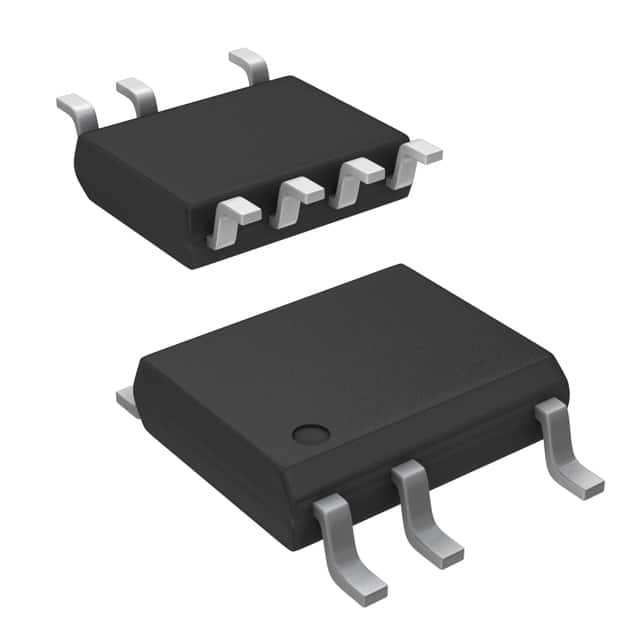
LNK304DN-TL Power Integrations
-
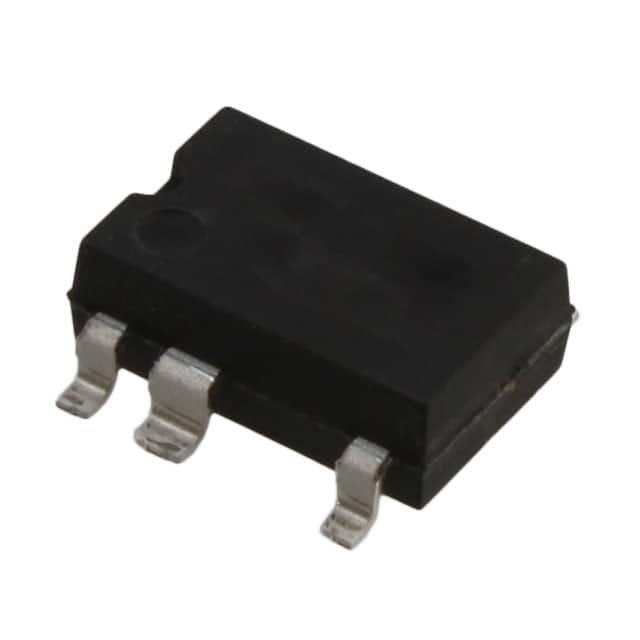
LNK304GN-TL Power Integrations
-
LNK304DG-TL Power Integrations
-
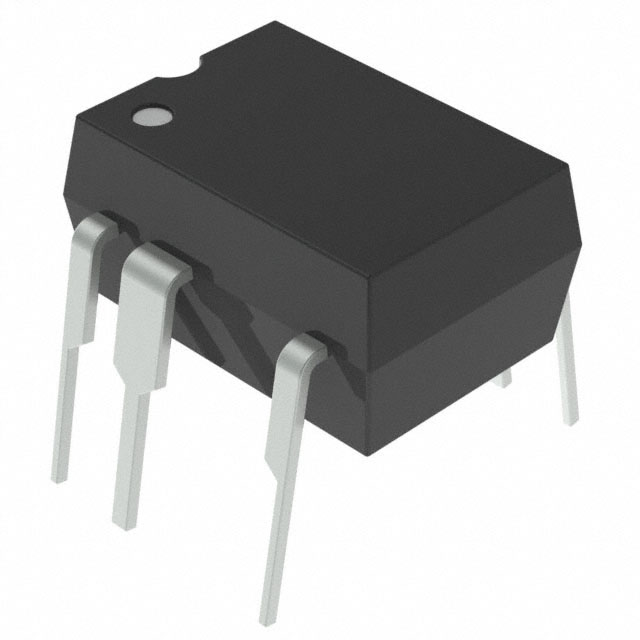
TNY277PN Power Integrations
-
TNY276PN Power Integrations
-
TNY278PN Power Integrations
-
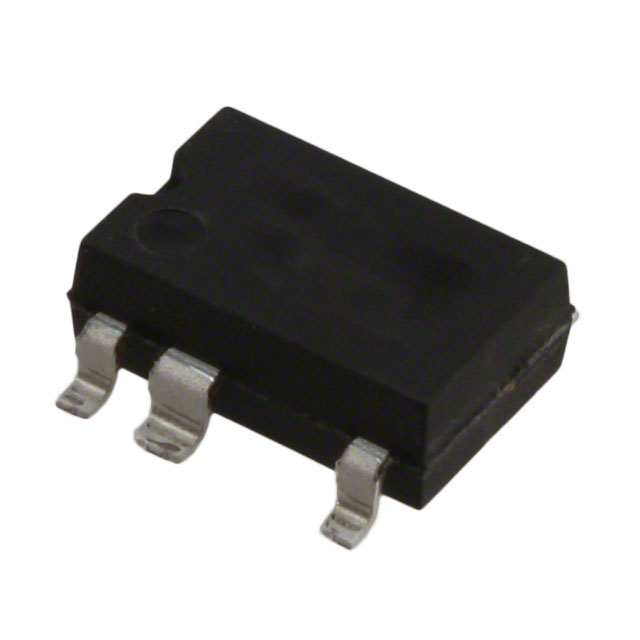
TNY278GN-TL Power Integrations
-
TNY280GN-TL Power Integrations
-
TOP266KG-TL Power Integrations
-
TOP258PN Power Integrations
-
TOP253PN Power Integrations
-
TOP253PNAU Power Integrations

- 1500+ Daily average RFQ Volume

- 20,000.000 Standard Product Unit

- 1800+ Worldwide Manufacturers

- 15,000+ In-stock Warehouse