Nexperia USA Inc. BZX84-C2V4,215
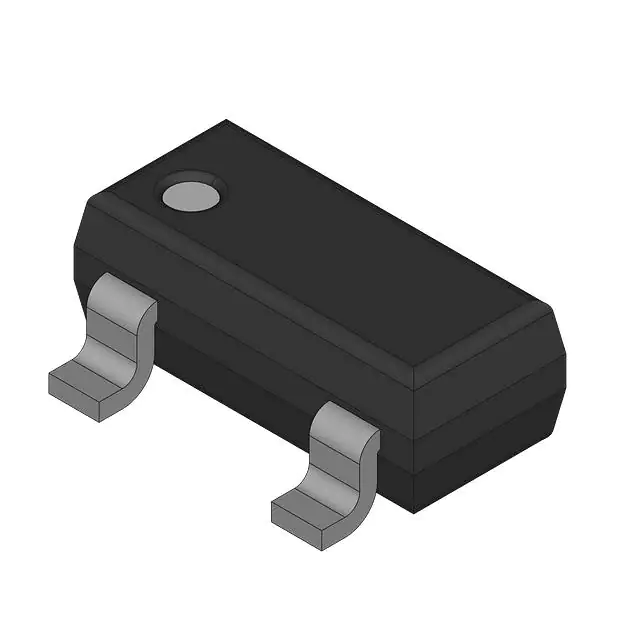

- Part No.:
- BZX84-C2V4,215
- Manufacturer:
- Nexperia USA Inc.
- Category:
- Single Zener Diodes
- Package:
- TO-236-3, SC-59, SOT-23-3
- Datasheet:
-
 BZX84-C2V4,215.pdf
- Description:
- DIODE ZENER 2.4V 250MW TO236AB
- Quantity:
-
Unit Price:$0
Ext Price:$0
- Payment:
-

- Shipping:
-


BZX84-C2V4,215 Information
- Specifications
- Product Details
- Comparison
- Tags
- Product attributes
- Attribute value
- Manufacturer:
- Nexperia USA Inc.
- Series:
- BZX84
- Package/Case:
- TO-236-3, SC-59, SOT-23-3
- Packaging:
- Tape & Reel (TR)
- Product Status:
- Active
- Voltage - Zener (Nom) (Vz):
- 2.4 V
- Tolerance:
- ±5%
- Power - Max:
- 250 mW
- Impedance (Max) (Zzt):
- 100 Ohms
- Current - Reverse Leakage @ Vr:
- 50 µA @ 1 V
- Voltage - Forward (Vf) (Max) @ If:
- 900 mV @ 10 mA
- Operating Temperature:
- -65°C ~ 150°C
- Grade:
- -
- Qualification:
- -
- Mounting Type:
- Surface Mount
- Supplier Device Package:
- TO-236AB
- Datasheet:
-
BZX84-C2V4,215.pdf
BZX84-C2V4,215 — 2.4V Zener Voltage Regulator Diode (SOT-23)
The BZX84-C2V4,215 is a 250mW 2.4V Zener voltage regulator diode from Nexperia in a SOT-23 surface-mount package. It's part of the BZX84 series covering 2.4V to 75V in E24 steps. The "C" suffix means ±5% tolerance — the loosest grade in the series, but the most widely stocked and the cheapest.
Here's the thing you need to know up front: a 2.4V Zener is fundamentally different from a 6.8V Zener. Below about 5V, Zeners operate via quantum tunneling (the true Zener effect) instead of avalanche breakdown.
The result: a soft knee, significant leakage below rated voltage, and junction capacitance that can hit 450pF. In an EEVblog teardown, a BZX84-C2V4 was found doing loop compensation in a VIPer53 supply — the designer was exploiting that soft characteristic deliberately. If you're expecting a razor-sharp 2.4V reference, this isn't the part.
What Are the Technical Specifications of BZX84-C2V4,215?
| Parameter | Value |
|---|---|
| Type | Single Zener Voltage Regulator Diode |
| Nominal Zener Voltage (VZ) | 2.4V @ IZT = 5mA (per Nexperia datasheet) |
| Tolerance | ±5% (C-grade); BZX84-B (±2%) and BZX84-A (±1%) also available |
| Maximum Power Dissipation (Ptot) | 250mW @ 25°C ambient (SOT-23 on FR4) |
| Maximum Zener Impedance (ZZT) | 100Ω @ IZT = 5mA |
| Reverse Leakage Current (IR) | 50µA max @ VR = 1V, 25°C |
| Forward Voltage (VF) | 900mV max @ IF = 10mA |
| Voltage Temp Coefficient (αVZ) | −1.6mV/K (negative — VZ drops as temp rises) |
| Junction Capacitance (Cd) | ~450pF typ @ VR = 0V, 1MHz |
| Non-repetitive Peak Reverse Power | 40W (tp = 100µs, square pulse) |
| Operating Junction Temperature (Tj) | −65°C to +150°C |
| Package | SOT-23 (TO-236AB), 3-pin, 3.0 × 1.4mm |
| Manufacturer | Nexperia (formerly NXP Semiconductors division) |
| Qualification | AEC-Q101 (automotive grade) |
Key numbers that matter: Per the Nexperia BZX84 series datasheet, the 2.4V part has the highest impedance in the entire family: 100Ω vs just 15Ω for a BZX84-C6V8. That means for every 1mA change in bias current, your "2.4V reference" moves 100mV.
The negative tempco (−1.6mV/K) means VZ drops as things heat up. And the 450pF junction capacitance is massive compared to higher-voltage Zeners — a BZX84-C12 has about 65pF. All three symptoms trace to the same physics: Zener breakdown below 5V is a fundamentally different mechanism with fundamentally softer behavior.
When Should You Use (and NOT Use) the BZX84-C2V4?
✅ Use BZX84-C2V4 when:
- Negative tempco compensation. The −1.6mV/K tempco is predictable and linear. Pair it with a forward-biased silicon diode (+2mV/K) and you can build a near-zero-drift reference without a bandgap IC.
- Low-headroom voltage shifting. Need to drop 2.4V from a low-voltage rail where an LDO's dropout would eat too much margin? A Zener in series is lossy but sometimes the only option that fits.
- Loop compensation networks in AC-DC converters. The soft I-V curve can be deliberately used as a non-linear element in feedback compensation — designers have deployed it in VIPer53 and similar circuits for exactly this reason.
- Clamping low-level analog signals. Protecting ADC inputs or op-amp nodes where the clamp voltage needs to sit well below a 3.3V rail. The soft knee is a feature here, not a bug — it provides graduated clamping.
❌ Don't use BZX84-C2V4 when:
- You need a precision voltage reference. 100Ω dynamic impedance + −1.6mV/K drift makes this a terrible reference. Use a TL431 (2.495V ±1%, 0.22Ω dynamic impedance) or a bandgap IC.
- Overvoltage protection on I²C, SPI, or any digital bus. The ~450pF capacitance will destroy your signal edges. On I²C it pulls the line low through leakage alone. Use a BAT54 Schottky clamp to the rail instead.
- You need a clean, sharp 2.4V rail. The soft knee means the Zener voltage varies significantly with bias current. For a clean 2.4V supply, use an adjustable LDO like LM1117-ADJ.
- The part is out of stock and you're tempted to substitute 4× 1N4148 in series. Yes, four forward-biased 1N4148s will give you roughly 2.4–2.8V. But the tempco and impedance are completely different. This works for a one-off prototype that needs to ship tomorrow, not for production.
What Are the Alternatives to BZX84-C2V4,215?
| Model | Type | Key Difference | Best For |
|---|---|---|---|
| BZX84-B2V4 | Zener, ±2% | Tighter tolerance, same VZ and package | Same application, tighter spec needed |
| BZX84-C2V7 | Zener, 2.7V | Slightly higher VZ, still soft-knee region | Marginally sharper knee at the cost of 300mV higher clamp |
| TL431 | Shunt Regulator | 2.495V ±1%, 0.22Ω dynamic Z, sharp knee | Precision references, feedback loops, any place accuracy matters |
| LM385-2.5 | Micropower Voltage Reference | 2.5V ±1.5%, 20µA minimum, 1Ω dynamic Z | Battery-powered, low-current reference applications |
| 4× 1N4148 in series | Standard Silicon Diode | ~2.4–2.8V forward drop, positive tempco, no Zener noise | Quick prototype substitute only — not a production solution |
BZX84-C2V4 vs BZX84-B2V4 — does tolerance matter at 2.4V? Going from ±5% to ±2% buys 72mV — less than what a 70°C swing costs you (112mV). Per the Nexperia datasheet, the tempco is negative and linear, so temperature drift dominates initial tolerance in any real design.
The B-grade costs maybe 20–30% more. It's worth it when the Zener is part of a calibrated circuit. For a general-purpose clamp or level shifter, the C-grade is fine.
BZX84-C2V4 vs TL431 — when the Zener isn't the answer. The TL431 gives you 2.495V with 0.22Ω dynamic impedance and ±1% tolerance. Below 5V, a shunt reference beats any Zener on accuracy, impedance, and temp stability. The Zener wins only for deliberate soft-knee applications or minimum BOM cost.
How Much Does BZX84-C2V4,215 Cost and Is It in Stock?
| Quantity | Reference Price (per unit) |
|---|---|
| 1–99 | $0.02–$0.05 |
| 100–999 | $0.015–$0.03 |
| 1,000–9,999 (full reel) | $0.01–$0.02 |
| 10,000+ | $0.008–$0.015 |
Contact ICMASS for a same-day quote. The BZX84-C2V4 is a lower-volume part compared to popular 3.3V/5.1V/12V Zeners — not every distributor stocks the full E24 range. We keep the BZX84 series on the shelf because engineers building compensation networks need unusual voltages.
If we don't have the exact tolerance grade in stock, we can usually cross-ship from Nexperia's authorized channel within 48 hours. Volume pricing drops fast above one full reel (3,000 pcs).
What Are the Typical Applications of BZX84-C2V4,215?
Analog Feedback Loop Compensation. The soft I-V curve makes a sub-5V Zener a non-linear impedance element. In a VIPer53 PWM controller compensation pin, this shapes loop gain in ways a linear RC network can't. Confirmed in an EEVblog teardown: a production VIPer53 supply used BZX84-C2V4 on the compensation pin, where the chip datasheet never recommends a Zener.
Low-Voltage ADC Input Protection. On a 2.5V-referenced ADC, a 3.3V TVS clamps too high. A BZX84-C2V4 from ADC pin to ground starts conducting around 2.0–2.2V (accounting for the soft knee). It provides graduated clamping that preserves the top of your valid signal range. Add a series resistor to limit current during overvoltage.
Bipolar Transistor Base Bias. Need to shift a signal by roughly one VBE? A 2.4V Zener in series with an NPN base gives a 2.4V + 0.7V = 3.1V threshold. The soft knee makes the transition gradual — ideal for soft-start circuits where snap-action would oscillate.
Negative Temperature Coefficient Compensation. The −1.6mV/K Zener tempco is nearly opposite to a forward-biased silicon diode's +2mV/K at 1mA. Pair them in series and the drifts cancel. A 2.4V + 0.7V = 3.1V combined reference can be trimmed below 50ppm/°C — competitive with a bandgap IC costing 10× more.
Undervoltage Lockout (UVLO) Threshold Setting. With a resistive divider and a comparator, a 2.4V Zener provides a stable UVLO threshold. The soft knee gives you built-in hysteresis — Zener current changes as the rail approaches the trip point, slightly shifting the reference. In many UVLO designs this is actually desirable.
Why Buy BZX84-C2V4,215 from ICMASS?
Full E24 Zener voltage range in stock. Most distributors cherry-pick the popular voltages (3.3V, 5.1V, 12V) and drop the rest. We stock the full BZX84 series, 2.4V to 75V, because analog designers need every step. Prototyping a compensation network and need 2.4V, 2.7V, and 3.0V side by side? We ship all three in one box.
Genuine Nexperia parts, factory-sealed reel. Zeners are among the most remarked parts in the market. A $0.01 Zener and a $0.05 Zener look identical under a microscope. We source BZX84 parts directly from Nexperia's authorized channel in factory tape and reel. Every reel is traceable to the lot number.
Cross-reference and selection support. Not sure whether your circuit needs a 2.4V Zener, a TL431, or a bandgap reference? Send us your requirements — accuracy, tempco, bias current, budget — and we'll tell you which part fits. Sometimes the answer is "skip the Zener entirely," and we'll say so.
Shenzhen warehouse, same-day shipping. Orders placed before 15:00 CST ship same day. DHL/FedEx international delivery in 5–10 days. Samples available for qualified prototype builds.
Frequently Asked Questions About BZX84-C2V4,215
Q1: Why is my 2.4V Zener only measuring 1.8V in circuit?
A: You're probably starving it on bias current. The BZX84-C2V4 has 100Ω dynamic impedance and needs about 5mA to hit its rated voltage. If you're biasing it through a 10kΩ resistor from a 5V rail, you're only feeding it (5V − 2.4V)/10kΩ = 260µA. At that current, the actual Zener voltage can be 500–600mV below nominal because of the soft knee. Either reduce the series resistor or switch to a TL431 if you need accuracy at low bias.
Q2: What's the difference between BZX84-C2V4 and BZX84-B2V4?
A: Tolerance. B-grade is ±2%, C-grade is ±5%. At 2.4V, that's a ±48mV window for B-grade vs ±120mV for C-grade. But here's the catch: the tempco (−1.6mV/K) swamps the tolerance difference above a 30°C temperature swing. If your circuit sees −20°C to +70°C, the tempco contribution alone is 144mV — more than the entire C-grade tolerance band. In a temperature-stable environment, B-grade matters. In the real world, focus on bias current stability first.
Q3: Can I use BZX84-C2V4 for I²C overvoltage protection?
A: No. Use a BAT54 Schottky clamp instead. The BZX84-C2V4 has ~450pF junction capacitance and leaks significant current below its rated voltage. On I²C lines, this capacitance rounds off your clock edges and the leakage pulls the data line low through the pull-up resistor. A real-world case from StackExchange: a BZX84-C5V1 on a switch input leaked 3mA at 5.1V and held the signal permanently low. Low-voltage Zeners and digital buses do not mix.
Q4: What happens if I replace BZX84-C2V4 with four 1N4148s in series?
A: It'll work on a breadboard, but don't ship it. Four forward-biased 1N4148s give you about 2.4–2.8V of forward drop. The tempco is positive (+8mV/K total) instead of negative (−1.6mV/K), the dynamic impedance is lower, and the capacitance is different. If the designer chose a 2.4V Zener for its soft knee or negative tempco, 1N4148s change the circuit behavior.
This is a field-expedient repair, not a BOM substitution. On an EEVblog thread about a VIPer53 supply, the consensus was that it might work but nobody recommended it for production.
Q5: Why does the datasheet show such a soft knee for the 2.4V part?
A: Physics. Zeners below ~5V work by quantum tunneling, not avalanche breakdown. Tunneling (the true "Zener effect") has a gradual onset — current starts flowing well below the rated voltage. Avalanche breakdown (above ~6V) has an abrupt, near-vertical I-V curve. The datasheet log-scale plot masks this: 50µA at just 1V reverse. That's 20% of rated test current flowing at 42% of rated voltage.
Q6: BZX84-C2V4,215 vs BZX84-C2V7,215 — which should I use?
A: C2V7 if you can tolerate the extra 300mV. The 2.7V Zener has a slightly sharper knee, slightly lower impedance, and slightly lower capacitance than the 2.4V. Every step up in voltage within the BZX84 series buys you marginally better Zener behavior. Only use the 2.4V when the lower clamp voltage is non-negotiable — for example, an ADC input that's referenced to 2.5V and cannot accept a 2.7V clamp.
Q7: Does the BZX84-C2V4 need a capacitor in parallel for noise filtering?
A: Usually yes. All Zeners generate broadband noise, and sub-5V Zeners are louder. The Zener effect (quantum tunneling) is inherently noisier than avalanche breakdown. A 100nF ceramic across the Zener is standard practice for analog reference applications. For clamping/protection applications where you're not using the Zener voltage as a reference, you can skip the cap — the noise doesn't matter.
Q8: What's the difference between BZX84-C2V4,215 and BZX84-C2V4-A2,215?
A: The "-A2" suffix is a manufacturer-specific variant identifier. Nexperia uses different ordering codes for slight variations: the base BZX84-C2V4,215 is the standard C-grade part on 3,000-unit reel. The -A2 variant may indicate a different sorting bin or test program. Electrically they are identical. Always check the specific ordering code with the manufacturer's latest PCN (Product Change Notification) if your BOM has an exact suffix match requirement.
Related Products
- BZX84-C2V7,215 — 2.7V Zener, slightly sharper knee, same SOT-23
- BZX84-B2V4,215 — ±2% tolerance version, same voltage and package
- TL431 — Adjustable Shunt Regulator, 2.495V ±1%, far better accuracy
- BAT54A-E3-08 — Dual Schottky, better choice for signal overvoltage protection
- Zener Diode Selection Guide — BZX84 vs BZT52H vs BZX55C Series
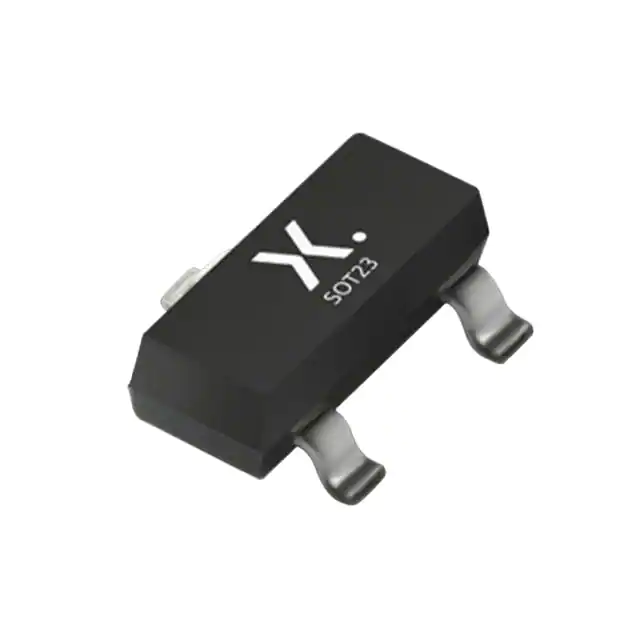
| Image |
|
|
|
|
|
| Part Number | BZX84-C12,215 | BZX84-C33,215 | BZX84-C10,215 | BZX84-C15,215 | BZX84-C16,215 |
| Manufacturer | Nexperia USA Inc. | Nexperia USA Inc. | Nexperia USA Inc. | Nexperia USA Inc. | Nexperia USA Inc. |
| Series | BZX84 | BZX84 | BZX84 | BZX84 | BZX84 |
| Package/Case | TO-236-3, SC-59, SOT-23-3 | TO-236-3, SC-59, SOT-23-3 | TO-236-3, SC-59, SOT-23-3 | TO-236-3, SC-59, SOT-23-3 | TO-236-3, SC-59, SOT-23-3 |
| Packaging | Tape & Reel (TR) | Tape & Reel (TR) | Tape & Reel (TR) | Tape & Reel (TR) | Tape & Reel (TR) |
| Product Status | Active | Active | Active | Active | Active |
| Voltage - Zener (Nom) (Vz) | 12 V | 33 V | 10 V | 15 V | 16 V |
| Tolerance | ±5% | ±5% | ±5% | ±5% | ±5% |
| Power - Max | 250 mW | 250 mW | 250 mW | 250 mW | 250 mW |
| Impedance (Max) (Zzt) | 25 Ohms | 80 Ohms | 20 Ohms | 30 Ohms | 40 Ohms |
| Current - Reverse Leakage @ Vr | 100 nA @ 8 V | 50 nA @ 23.1 V | 200 nA @ 7 V | 50 nA @ 10.5 V | 50 nA @ 11.2 V |
| Voltage - Forward (Vf) (Max) @ If | 900 mV @ 10 mA | 900 mV @ 10 mA | 900 mV @ 10 mA | 900 mV @ 10 mA | 900 mV @ 10 mA |
| Operating Temperature | -65°C ~ 150°C | -65°C ~ 150°C | -65°C ~ 150°C | -65°C ~ 150°C | -65°C ~ 150°C |
| Grade | - | - | - | - | - |
| Qualification | - | - | - | - | - |
| Mounting Type | Surface Mount | Surface Mount | Surface Mount | Surface Mount | Surface Mount |
| Supplier Device Package | TO-236AB | TO-236AB | TO-236AB | TO-236AB | TO-236AB |
User Guide
- Purchase & Inquiry
- Package
- Shipping Information
- Customer Review
You may place an order without registering to IC-MAX.COM
We strongly suggest you sign in before purchasing as you can track your order in real time.
For your convenience, we accept multiple payment methods in USD, including PayPal, Credit Card, and wire transfer.
RFQ (Request for Quotations)
It is recommended to request for quotations to get the latest prices and inventories about the part.
Our sales will reply to your request by email within 24 hours.
1. You'll receive an order information email in your inbox. (Please remember to check the spam folder if you didn't hear from us).
2. Since inventories and prices may fluctuate to some extent, the sales manager is going to reconfirm the order and let you know if there are any updates.
-

- Step1:Prepare product
-

- Step2:Vacuum packaging
-

- Step3:Anti-static bag
-

- Step4:Individual package
-

- Step5:Packaging box
-
- Step6:Barcode shipping label
Shipping starts at $40, but some countries will exceed $40. For example (South Africa, Brazil, India, Pakistan, Israel, etc.)
The basic freight (for package ≤0.5kg or corresponding volume) depends on the time zone and country.
Currently, our products are shipped through DHL, FedEx, SF, and UPS.
Delivery TimeOnce the goods are shipped, estimated delivery time depends on the shipping methods you chose:
FedEx International, 5-7 business days.
The following are some common countries' logistic time.

- Hot Sale
- Related Categories
- Include Parts
- Popular Search
The following parts include "BZX84-C2V4,215" in Silicon Labs BZX84-C2V4,215.
- Part Number
- Manufacturer
- Package
- Description
- MMBZ5240B-7-F Diodes Incorporated TO-236-3, SC-59, SOT-23-3 DIODE ZENER 2.4V 250MW TO236AB
- BZT52C5V6T-7 Diodes Incorporated TO-236-3, SC-59, SOT-23-3 DIODE ZENER 2.4V 250MW TO236AB
- MMSZ5231B-7-F Diodes Incorporated TO-236-3, SC-59, SOT-23-3 DIODE ZENER 2.4V 250MW TO236AB
- BZT52C15-7-F Diodes Incorporated TO-236-3, SC-59, SOT-23-3 DIODE ZENER 2.4V 250MW TO236AB
- BZX84C3V3LT1G onsemi TO-236-3, SC-59, SOT-23-3 DIODE ZENER 2.4V 250MW TO236AB
- MMSZ5245BS-7-F Diodes Incorporated TO-236-3, SC-59, SOT-23-3 DIODE ZENER 2.4V 250MW TO236AB
- MMSZ4682T1G onsemi TO-236-3, SC-59, SOT-23-3 DIODE ZENER 2.4V 250MW TO236AB
- BZT52C15S-7-F Diodes Incorporated TO-236-3, SC-59, SOT-23-3 DIODE ZENER 2.4V 250MW TO236AB
- MM5Z5V1ST1G onsemi TO-236-3, SC-59, SOT-23-3 DIODE ZENER 2.4V 250MW TO236AB
- SMAJ4744A-TP Micro Commercial Co TO-236-3, SC-59, SOT-23-3 DIODE ZENER 2.4V 250MW TO236AB
The following parts are popular search parts in Test and Measurement.
Inventory:9,686
Please send an inquiry. Send us your inquiry, and we will respond immediately.

- 1500+ Daily average RFQ Volume

- 20,000.000 Standard Product Unit

- 1800+ Worldwide Manufacturers

- 15,000+ In-stock Warehouse