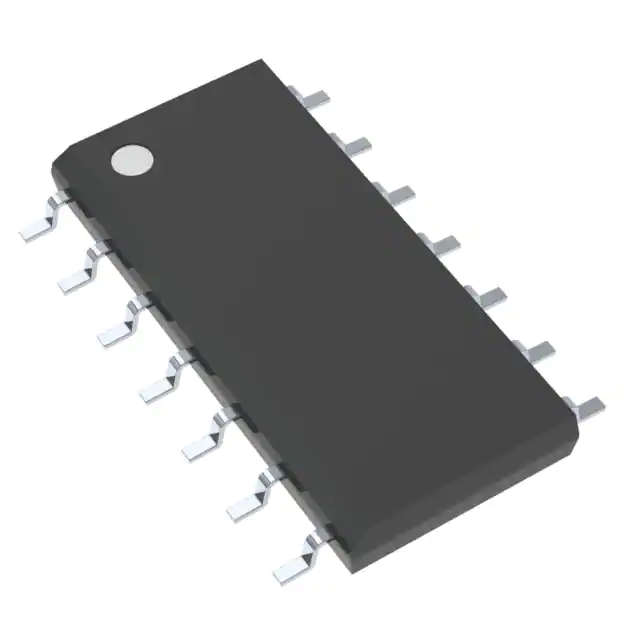
Texas Instruments LM339DR

- Part No.:
- LM339DR
- Manufacturer:
- Texas Instruments
- Category:
- Comparators
- Package:
- 14-SOIC (0.154", 3.90mm Width)
- Datasheet:
-
 LM339DR.pdf
- Description:
- IC COMPARATOR 4 DIFF 14SOIC
- Quantity:
-
Unit Price:$0
Ext Price:$0
- Payment:
-

- Shipping:
-


LM339DR Information
- Specifications
- Product Details
- Comparison
- Tags
- Product attributes
- Attribute value
- Manufacturer:
- Texas Instruments
- Package/Case:
- 14-SOIC (0.154", 3.90mm Width)
- Series:
- -
- Packaging:
- Tape & Reel (TR)
- Product Status:
- Active
- Type:
- General Purpose
- Number of Elements:
- 4
- Output Type:
- Open-Collector
- Voltage - Supply, Single/Dual (±):
- 2V ~ 30V, ±1V ~ 15V
- :
- 5mV @ 30V
- Voltage - Input Offset (Max):
- 0.25µA @ 5V
- Current - Input Bias (Max):
- 20mA
- Current - Output (Typ):
- 2.5mA
- Current - Quiescent (Max):
- -
- CMRR, PSRR (Typ):
- -
- Propagation Delay (Max):
- -
- Hysteresis:
- 0°C ~ 70°C
- Operating Temperature:
- -
- Grade:
- -
- Qualification:
- Surface Mount
- :
- 14-SOIC
- Datasheet:
-
LM339DR.pdf
LM339DR — Quad Differential Comparator from Texas Instruments
The LM339DR is a quad differential comparator in a 14-pin SOIC package — four independent voltage comparators that run from a single 2V–30V supply or dual ±1V–±15V rails. Total supply current is 0.8mA for all four channels combined, response time is 1.3µs, and the open-collector outputs pull down to within 250mV of ground while sinking up to 6mA per channel.
Input common-mode range includes ground, so it works in single-supply circuits without a negative rail. If you need a quad comparator that just works, the LM339DR is the industry default — billions shipped, second-sourced by onsemi, ST, and Diodes Inc. Per the TI datasheet, it's been the go-to quad comparator for over four decades.
What Are the Technical Specifications of LM339DR?
| Parameter | Value |
|---|---|
| Number of Comparators | 4 |
| Package | SOIC-14 (3.91mm body width) |
| Supply Voltage (Single) | 2V to 30V |
| Supply Voltage (Dual) | ±1V to ±15V |
| Input Offset Voltage (Vos) | 2mV typ, 5mV max @ 25°C |
| Input Bias Current (Ib) | 25nA typ, 250nA max |
| Input Offset Current (Ios) | 3nA typ, 50nA max |
| Supply Current (all 4 channels) | 0.8mA typ, 2.5mA max |
| Response Time | 1.3µs (TTL step, 5mV overdrive) |
| Output Sink Current | 6mA typ, 20mA max |
| Output Saturation Voltage | 250mV typ @ 4mA sink |
| Output Type | Open-Collector (TTL/CMOS/MOS compatible) |
| Common-Mode Input Range | 0V to Vcc – 1.5V (@ 25°C) |
| Differential Input Voltage | ±30V |
| Large-Signal Voltage Gain | 106dB typ (200V/mV) |
| Operating Temperature | 0°C to 70°C |
Key numbers that matter: The 0.8mA supply current covers all four channels — that's 200µA per comparator. Input bias current of 25nA means you can use high-value divider resistors (100kΩ+) without significant offset error. The 1.3µs response time is fast enough for power-supply fault detection and slow enough that you don't need to worry about PCB layout parasitics.
What Are the Alternatives to LM339DR?
| Model | Manufacturer | Key Difference | Best For |
|---|---|---|---|
| LM339DR2G | onsemi | Direct drop-in, identical specs | Stock diversification |
| LM339DT | STMicroelectronics | Direct drop-in, A-grade available (±1mV offset) | European supply chain |
| LM339B | Texas Instruments | 38V max supply, 0.37mV offset, 1µs response, 200µA/ch | Precision upgrade, drop-in |
| LM2901DR2G | onsemi | –40°C to +105°C, same pinout | Automotive/Industrial |
| LP339M/NOPB | Texas Instruments | 100µA total supply current (25× lower) | Battery-powered devices |
| LM239DR | Texas Instruments | –25°C to +85°C, same pinout | Extended temperature |
LM339DR vs LM339B — should you upgrade? The LM339B pushes the max supply to 38V, drops offset to 0.37mV, cuts supply current to 200µA per channel, and brings response time down to 1µs. It's a drop-in replacement in the same SOIC-14 package. Costs about 30% more. Use it when offset voltage matters for precision threshold detection, or when you're pushing the supply near 30V and want headroom.
LM339DR vs LM393DR — quad or dual? Same silicon, different channel count. The LM393DR (SOIC-8) gives you two comparators; the LM339DR (SOIC-14) gives you four. Per-channel specs are identical. If you need 3+ comparators, the LM339DR saves board space and BOM lines versus two LM393DRs. If you only need 1–2 channels, the LM393DR is the smaller, cheaper choice.
How Much Does LM339DR Cost and Is It in Stock?
| Quantity | TI LM339DR (per unit) | onsemi LM339DR2G (per unit) |
|---|---|---|
| 1–49 | $0.15–$0.25 | $0.12–$0.20 |
| 50–999 | $0.10–$0.15 | $0.08–$0.12 |
| 1,000–4,999 | $0.08–$0.10 | $0.06–$0.08 |
| 5,000+ (full reel) | $0.06–$0.08 | $0.04–$0.06 |
Global inventory across TI and onsemi channels exceeds 600,000 units as of mid-2026. No allocation, no shortage. Lead time for standard quantities: 2–5 business days. Prices sampled July 2026, subject to change with volume and market conditions. Contact us for a same-day quote on your specific quantity.
What Are the Typical Applications of LM339DR?
Window Comparator (Over/Under-Voltage Detection): Two comparators bracket a voltage range with upper and lower thresholds set by a resistor divider. The two open-collector outputs wire-OR through a single pull-up — output goes HIGH only when the monitored voltage is inside the window. No external logic gates needed. Common in power-good circuits, battery management, and supply rail monitoring.
Relaxation Oscillator: One comparator + one capacitor + three resistors = a square-wave oscillator. Period ≈ 1.386 × R × C. Works from below 1Hz to about 100kHz. Useful as a low-cost timing reference, LED flasher, or clock source for simple digital circuits.
Zero-Crossing Detector: One input tied to ground, the other AC-coupled to the signal. The open-collector output interfaces directly with 3.3V or 5V logic regardless of the AC signal amplitude. Used in phase-control circuits, frequency counters, and TRIAC triggering.
Battery Voltage Monitor (Multi-Cell): Four comparators in one package monitor four independent voltage thresholds — one per Li-Ion cell in a 4S pack. Total chip supply current is only 0.8mA, practical for always-on battery monitoring.
Level Shifter / Logic Translator: Pull the output up to any voltage up to 30V, independent of the comparator's own supply. A 3.3V input signal can control a 12V or 24V load without additional level-shifting circuitry. Per the TI datasheet, this is one of the most underutilized features of open-collector comparators.
Why Buy LM339DR from ICMASS?
Genuine TI and onsemi parts only. Every reel comes from authorized distribution with full traceability to the manufacturer's lot code and date code. No gray market, no refurbished re-marked parts. In our experience sourcing comparators in the Shenzhen market, the LM339 is counterfeited less often than popular MOSFETs and LDOs, but it still happens — we test every incoming lot.
Shenzhen warehouse, same-day shipping. Orders placed before 15:00 CST ship same day. Next-day delivery to Shenzhen/Guangzhou. 2–3 days rest of China. International via DHL/FedEx: 5–10 days.
Cross-reference support included. Not sure whether LM339DR, LM339B, LM2901, or LP339 fits your design? Tell us your voltage, temperature, and power requirements — we'll recommend the right part, even if the cheaper one does the job.
BOM consolidation. Ordering MOSFETs, LDOs, diodes, and comparators for one PCB? We stock 55+ IC product lines and consolidate into a single shipment with one invoice.
Frequently Asked Questions About LM339DR
Q1: Why is my LM339 output never going HIGH?
A: The LM339 has an open-collector output — it can only pull LOW to ground, not drive HIGH. You must add an external pull-up resistor (typically 1kΩ–10kΩ) from the output pin to your positive supply. Without a pull-up, the output floats. With a 5V supply and 4.7kΩ resistor, you get about 1mA of pull-up current — enough for clean edges without excessive power. This is the single most common mistake, confirmed across dozens of threads on the TI E2E forum.
Q2: Why does my LM339 oscillate or chatter at the switching threshold?
A: You need hysteresis. Connect a high-value resistor (100kΩ–1MΩ) from the output back to the non-inverting (+) input. This creates two separate threshold voltages — one for rising input, one for falling — that eliminate chatter. Without hysteresis, any slow or noisy input signal will cause the output to rapidly toggle as the input hovers near the reference voltage. TI's application note SNOAA35F covers this in detail with worked examples.
Q3: Can I use LM339 as an op-amp (amplifier)?
A: Don't. The LM339 is a comparator, not an op-amp. It has no internal frequency compensation, its output stage is open-collector only, and its gain stage is optimized for saturated switching — not linear amplification. Attempting to close a feedback loop around it almost always results in oscillation. For quad op-amp applications, use the LM324DR instead.
Q4: What's the maximum input voltage the LM339 can handle?
A: The input common-mode range extends from 0V (ground) up to Vcc – 1.5V at room temperature, or Vcc – 2V over the full 0°C to 70°C range. This is the number one cause of "it works on the bench but fails at cold" complaints, because the headroom requirement increases as temperature drops. Any input below –0.3V forward-biases the substrate isolation diode and can cause latch-up or phase reversal. The differential input voltage between the two inputs of a single comparator can safely reach ±30V.
Q5: What's the difference between LM339 and LM339A?
A: The LM339A has tighter input offset voltage: 2mV max versus 5mV max for the standard LM339. All other specs are identical. Choose the A-grade when your threshold detection needs better precision; otherwise the standard LM339DR is sufficient. The price difference is typically a few cents.
Q6: Can I replace LM339DR with LM339DR2G from onsemi?
A: Yes. The LM339DR2G is a direct, pin-compatible, spec-compatible drop-in replacement. No PCB changes needed. Many manufacturers qualify both TI and onsemi as alternate sources on the same BOM. The onsemi version is sometimes $0.02–0.04 cheaper at high volume.
Q7: How do I calculate the pull-up resistor value for LM339?
A: Three constraints drive the choice. (1) Sink current must stay below 6mA, so Rpullup ≥ Vpullup / 6mA. For 5V, that means at least 833Ω — stay above 1kΩ for safety. (2) Rise time ≈ 2.2 × Rpullup × Cload. With 10kΩ and 15pF load capacitance, rise time is about 330ns. With 100kΩ, it's 3.3µs — visible on a scope. (3) Power: each output draws Vpullup / Rpullup when LOW. At 4.7kΩ and 5V, that's about 1mA per channel. Sweet spot for most designs: 4.7kΩ–10kΩ to a 5V rail.
Q8: How should I handle unused comparator channels on the LM339?
A: Tie the unused inputs to known voltages through resistors (≥10kΩ). TI's recommended method: connect the non-inverting (+) input to Vcc via 10kΩ, and the inverting (–) input to GND via 10kΩ. This forces the output LOW (sinking) — stable, no oscillation. Never leave inputs floating — they'll pick up noise, oscillate, and couple interference into the active channels. Leave unused outputs unconnected.
Q9: What is the fastest signal the LM339 can handle?
A: With 5mV overdrive and TTL-level output swing, typical propagation delay is 1.3µs. With 100mV overdrive, it drops to about 300ns. The maximum practical frequency depends on acceptable phase delay in your application, but 100kHz square waves with clean edges are feasible. For sub-100ns response, you'd need a high-speed comparator like the TLV3501 (4.5ns).
Q10: LM339 vs LM324 — what's the actual difference?
A: Both are quad devices in SOIC-14, but internally they're completely different. The LM339 is a comparator: open-collector output, no frequency compensation, fast recovery from saturation, optimized for clean switching. The LM324 is an op-amp: push-pull output, internally compensated for linear operation, can drive capacitive loads, but takes 10µs+ to recover from saturation. Using a comparator as an op-amp = oscillation. Using an op-amp as a comparator = slow, higher power, and possible latch-up. Pick the right part for the job.
Q11: Why does adding a capacitor to the LM339 output make things worse?
A: The output is an open-collector NPN transistor. When it turns on, it discharges the capacitor with a hard current pulse — often hitting the 20mA limit. This stresses the device and can cause thermal damage over repeated switching. When the output turns off, the capacitor charges through the pull-up resistor, creating a slow RC ramp instead of a clean edge. Filter the input with hysteresis instead. If you absolutely must drive a capacitive load, add a 100Ω–1kΩ series resistor to limit the discharge current.
Q12: What are the real-world failure modes of LM339?
A: Based on repair reports from the EEVblog and TI E2E forums, four failure modes dominate. (1) Negative input voltage below –0.3V causes substrate injection and latch-up — the output sticks at one rail until power is cycled. (2) Output shorted to Vcc through a missing or undersized pull-up resistor destroys the output transistor through overcurrent, since there's no thermal shutdown. (3) Input voltage exceeding Vcc causes phase reversal — the output polarity inverts. (4) Ground bounce from switching loads couples into the high-impedance inputs and causes false triggers. All four are preventable: add clamp diodes on inputs, use ≥1kΩ pull-up resistors, keep inputs at least 2V below Vcc, and use solid supply decoupling.
Internal Links
| Image |
|
|
|
|
| Part Number | LM339DR | LM339DRG3 | LM339DRE4 | LM339DRG4 |
| Manufacturer | Texas Instruments | Texas Instruments | Texas Instruments | Texas Instruments |
| Package/Case | 14-SOIC (0.154", 3.90mm Width) | 14-SOIC (0.154", 3.90mm Width) | 14-SOIC (0.154", 3.90mm Width) | 14-SOIC (0.154", 3.90mm Width) |
| Series | - | - | - | - |
| Packaging | Tape & Reel (TR) | Tape & Reel (TR) | Tape & Reel (TR) | Tape & Reel (TR) |
| Product Status | Active | Obsolete | Obsolete | Active |
| Type | General Purpose | General Purpose | General Purpose | General Purpose |
| Number of Elements | 4 | 4 | 4 | 4 |
| Output Type | Open-Collector | Open-Collector | Open-Collector | Open-Collector |
| Voltage - Supply, Single/Dual (±) | 2V ~ 30V, ±1V ~ 15V | 2V ~ 30V, ±1V ~ 15V | 2V ~ 30V, ±1V ~ 15V | 2V ~ 30V, ±1V ~ 15V |
| 5mV @ 30V | 5mV @ 30V | 5mV @ 30V | 5mV @ 30V | |
| Voltage - Input Offset (Max) | 0.25µA @ 5V | 0.25µA @ 5V | 0.25µA @ 5V | 0.25µA @ 5V |
| Current - Input Bias (Max) | 20mA | 20mA | 20mA | 20mA |
| Current - Output (Typ) | 2.5mA | 2.5mA | 2.5mA | 2.5mA |
| Current - Quiescent (Max) | - | - | - | - |
| CMRR, PSRR (Typ) | - | - | - | - |
| Propagation Delay (Max) | - | - | - | - |
| Hysteresis | 0°C ~ 70°C | 0°C ~ 70°C | 0°C ~ 70°C | 0°C ~ 70°C |
| Operating Temperature | - | - | - | - |
| Grade | - | - | - | - |
| Qualification | Surface Mount | Surface Mount | Surface Mount | Surface Mount |
| 14-SOIC | 14-SOIC | 14-SOIC | 14-SOIC |
User Guide
- Purchase & Inquiry
- Package
- Shipping Information
- Customer Review
You may place an order without registering to IC-MAX.COM
We strongly suggest you sign in before purchasing as you can track your order in real time.
For your convenience, we accept multiple payment methods in USD, including PayPal, Credit Card, and wire transfer.
RFQ (Request for Quotations)
It is recommended to request for quotations to get the latest prices and inventories about the part.
Our sales will reply to your request by email within 24 hours.
1. You'll receive an order information email in your inbox. (Please remember to check the spam folder if you didn't hear from us).
2. Since inventories and prices may fluctuate to some extent, the sales manager is going to reconfirm the order and let you know if there are any updates.
-

- Step1:Prepare product
-

- Step2:Vacuum packaging
-

- Step3:Anti-static bag
-

- Step4:Individual package
-

- Step5:Packaging box
-

- Step6:Barcode shipping label
Shipping starts at $40, but some countries will exceed $40. For example (South Africa, Brazil, India, Pakistan, Israel, etc.)
The basic freight (for package ≤0.5kg or corresponding volume) depends on the time zone and country.
Currently, our products are shipped through DHL, FedEx, SF, and UPS.
Delivery TimeOnce the goods are shipped, estimated delivery time depends on the shipping methods you chose:
FedEx International, 5-7 business days.
The following are some common countries' logistic time.

- Hot Sale
- Related Categories
- Include Parts
- Popular Search
The following parts include "LM339DR" in Silicon Labs LM339DR.
- Part Number
- Manufacturer
- Package
- Description
- LM2903DR Texas Instruments 14-SOIC (0.154", 3.90mm Width) IC COMPARATOR 4 DIFF 14SOIC
- LM339DR Texas Instruments 14-SOIC (0.154", 3.90mm Width) IC COMPARATOR 4 DIFF 14SOIC
- LM339PWR Texas Instruments 14-SOIC (0.154", 3.90mm Width) IC COMPARATOR 4 DIFF 14SOIC
- LM393DT STMicroelectronics 14-SOIC (0.154", 3.90mm Width) IC COMPARATOR 4 DIFF 14SOIC
- LM2901PWR Texas Instruments 14-SOIC (0.154", 3.90mm Width) IC COMPARATOR 4 DIFF 14SOIC
- LM2903DT STMicroelectronics 14-SOIC (0.154", 3.90mm Width) IC COMPARATOR 4 DIFF 14SOIC
- LM393DR Texas Instruments 14-SOIC (0.154", 3.90mm Width) IC COMPARATOR 4 DIFF 14SOIC
- LM239DR Texas Instruments 14-SOIC (0.154", 3.90mm Width) IC COMPARATOR 4 DIFF 14SOIC
- LM339APWR Texas Instruments 14-SOIC (0.154", 3.90mm Width) IC COMPARATOR 4 DIFF 14SOIC
- LM2903P Texas Instruments 14-SOIC (0.154", 3.90mm Width) IC COMPARATOR 4 DIFF 14SOIC
The following parts are popular search parts in Test and Measurement.
Inventory:31,812
Please send an inquiry. Send us your inquiry, and we will respond immediately.

- 1500+ Daily average RFQ Volume

- 20,000.000 Standard Product Unit

- 1800+ Worldwide Manufacturers

- 15,000+ In-stock Warehouse