PC817 Equivalent, Alternative & Replacement Guide — EL817, TLP785, LTV817 Compared
PC817 Equivalent, Alternative & Replacement Guide - EL817, TLP785, LTV817 Compared | ICMASS
The PC817 is Sharp's classic 4-pin DIP phototransistor optocoupler - the default choice for SMPS feedback loops, microcontroller isolation, and general signal isolation for decades. But Sharp's production volumes have shrunk, and PC817 lead times stretch when demand spikes. The good news: PC817 has more viable drop-in replacements than almost any other optocoupler. The three best alternatives are Everlight EL817 (identical specs, widely stocked), Toshiba TLP785 (5kVrms isolation, wider temp range), and Lite-On LTV817 (direct equivalent, competitive pricing).
But there's a catch. The PC817's VCEO is only 35V on the standard part - the PC817X variant bumps that to 80V. If your circuit was designed for the 80V version and you drop in a 35V-rated replacement, it works on the bench and fails in the field. Match the voltage rating and CTR grade, not just the part number.
PC817 vs EL817 vs TLP785: Full Comparison
| Parameter | PC817 (Sharp) | EL817 (Everlight) | TLP785 (Toshiba) |
|---|---|---|---|
| Type | Phototransistor Optocoupler | Phototransistor Optocoupler | Phototransistor Optocoupler |
| Package | DIP-4 / SMD-4 | DIP-4 / SMD-4 | DIP-4 |
| Pinout | 1-A, 2-K, 3-E, 4-C | 1-A, 2-K, 3-E, 4-C | 1-A, 2-K, 3-E, 4-C |
| Forward Voltage (VF) | 1.2V typ / 1.4V max | 1.2V typ / 1.4V max | 1.15V typ / 1.3V max |
| VCEO (Collector-Emitter) | 35V (standard) / 80V (PC817X) | 35V (standard) / 80V (EL817-G) | 80V |
| Collector Current (IC) | 50mA | 50mA | 50mA |
| CTR Range | 50–600% (by rank) | 50–600% (by rank) | 50–600% (by rank) |
| CTR Grades | A/B/C/D | A/B/C/D + X/Y | Blank/GB/GR/GL |
| Isolation Voltage | 2.5–5kVrms | 5kVrms | 5kVrms |
| Rise/Fall Time | 18µs typ | 18µs typ | 12µs typ (faster) |
| Cut-off Frequency | 80kHz | 80kHz | 80kHz |
| Operating Temperature | -30 to +100°C | -55 to +110°C | -55 to +110°C |
| Certifications | UL, VDE, CQC | UL, VDE, CQC, RoHS | UL, VDE, CQC, RoHS |
| Manufacturer | Sharp (Japan) | Everlight (Taiwan) | Toshiba (Japan) |
| Relative Cost (1k) | $0.05–0.10 | $0.04–0.08 | $0.06–0.12 |
When to Use Each Alternative
When to Use EL817 (Everlight)
- Direct, no-questions-asked PC817 replacement. Same pinout, same VCEO (35V standard / 80V G-variant), same CTR grades, same switching speed. Everlight is a tier-1 Taiwanese opto manufacturer with decades of production history. For 95% of PC817 sockets, the EL817 drops in with zero circuit changes.
- Cost-sensitive production. The EL817 typically prices below both the original Sharp PC817 and the Toshiba TLP785. For high-volume SMPS and consumer electronics, the savings add up without any performance trade-off.
- Wide temperature range needed. The EL817's -55 to +110°C operating range beats the standard PC817's -30 to +100°C. For outdoor equipment and industrial controls, this matters.
When to Use TLP785 (Toshiba)
- Designs that need every last bit of switching speed. At 12µs rise/fall vs 18µs for PC817/EL817, the TLP785 is ~33% faster. In high-frequency SMPS feedback loops or serial data isolation where every microsecond counts, the TLP785 is the upgrade.
- Guaranteed 5kVrms isolation with no variant-dependent exceptions. All TLP785 units deliver 5kVrms. PC817 isolation varies by sub-model (2.5kV to 5kV). If your safety certification depends on a specific isolation voltage, the TLP785 removes the guesswork.
- All units are 80V VCEO. No need to track which suffix means high-voltage. Every TLP785 handles 80V collector-emitter. If your BOM has been burned by mixing up PC817 and PC817X, switching to TLP785 simplifies procurement.
When NOT to Use Any PC817-Type Optocoupler
- Digital isolators for high-speed data (>1Mbps). The PC817 family is an 80kHz part. For SPI, I2C, or UART isolation above ~10kbps, the pulse shape distorts badly. Use a digital isolator like Si8641 (Silicon Labs) or ISO7741 (TI).
- Gate drive for MOSFETs/IGBTs. PC817 outputs 50mA max and switches in microseconds. Gate drive needs amperes and nanoseconds. Use a dedicated gate-drive optocoupler like TLP250 or FOD3180.
- AC mains triac switching. The PC817 is a transistor-output device. For AC load switching, you need a triac-output optocoupler like MOC3021 or MOC3041 with built-in zero-cross detection.
- Linear/analog signal isolation. The PC817's CTR varies 2:1 over temperature and degrades over time. For analog isolation where linearity matters, use a linear optocoupler like IL300 or HCNR200 with a servo feedback loop.
Pinout & Layout Notes
All three alternatives share the identical pinout. Pin 1 (Anode) has the LED's positive terminal, Pin 2 (Cathode) goes to ground or the current-limiting resistor, Pin 3 (Emitter) is the phototransistor output low-side, Pin 4 (Collector) is the output high-side. The input side is on pins 1–2, output on pins 3–4. The isolation barrier runs down the middle of the package - keep your PCB traces on the input side physically separated from output-side traces, and maintain the creepage distance specified in your safety standard.
CTR grade matters for SMPS feedback. The current transfer ratio directly affects the feedback loop gain. If your original BOM specifies PC817B (CTR 130–260%), replacing it with an ungraded EL817 (CTR 50–600%) may cause the power supply to oscillate at light load or sag under heavy load. Match the CTR grade letter: A=A, B=B, C=C, D=D. Everlight adds X (100–200%) and Y (150–300%) which sit between A and C - these are safe substitutes for A-grade or B-grade respectively.
Other Alternatives Worth Knowing
| Part | Manufacturer | Notes |
|---|---|---|
| LTV817 | Lite-On | Direct PC817 equivalent, widely available. Same pinout, same specs. Third major source after Sharp/Everlight. |
| HCPL-817 | Broadcom/Avago | Industrial-grade equivalent. Same pinout, 5kVrms, -55 to +100°C. Premium brand, premium price. |
| FOD817 | onsemi/Fairchild | Drop-in replacement. Same DIP-4 pinout, CTR 50–600%. Good alternative source. |
| KL817 | Kinglight (晶台) | Chinese domestic alternative. DIP-4, VF=1.2V, CTR=50–600%. Lowest cost option for non-safety-critical applications. |
| SFH618A | Vishay | Premium alternative with lower input current (0.5mA typ for CTR >100%). For low-power designs. |
Frequently Asked Questions
Q1: Is the EL817 a direct drop-in replacement for the PC817?
A: Yes, in the vast majority of circuits. Same DIP-4 pinout, same VF (1.2V), same IC (50mA), same CTR ranges by grade. The one thing to verify: if your circuit uses the high-voltage PC817X (VCEO=80V), match it with the EL817-G variant, not the standard EL817 (35V). Standard-to-standard and X-to-G are interchangeable pairs.
Q2: What happens if I use the wrong CTR grade?
A: In digital/switching applications - usually nothing. The transistor is either fully on or fully off, so CTR variation has minimal effect. But in analog feedback loops (SMPS regulation), the CTR sets the loop gain. A wider CTR spread means wider gain variation, which can cause instability, poor regulation, or audible noise from the transformer. Match the grade letter for any circuit where the optocoupler operates in its linear region.
Q3: Can I replace PC817 with TLP785 in an SMPS feedback circuit?
A: Yes, and it's often an upgrade. The TLP785's faster rise/fall times (12µs vs 18µs) and guaranteed 80V VCEO give you better transient response and more voltage headroom. Match the CTR grade: TLP785(GB) ≈ PC817B. The TLP785 costs slightly more but eliminates the voltage-rating guesswork.
Q4: What is the difference between PC817 and PC817X?
A: VCEO voltage rating. Standard PC817: 35V. PC817X: 80V. The "X" suffix on Sharp parts means high voltage. But be careful - on Everlight EL817, "X" means a CTR grade (100–200%), not high voltage. Everlight uses "G" for high voltage (EL817-G = 80V). This naming inconsistency has caused more than a few production-line substitutions to go wrong.
Q5: Why does my PC817 work on the bench but fail after weeks in the field?
A: Likely VCEO overstress. If your circuit puts 50–60V across the output transistor and you've installed a standard 35V PC817 (instead of the 80V PC817X the design requires), the part works initially because the breakdown voltage has manufacturing margin. Over weeks of thermal cycling, the junction degrades until the leakage current becomes unacceptable. Check your circuit's collector-emitter voltage under worst-case conditions, then verify the optocoupler's VCEO rating.
Q6: Are Chinese domestic alternatives like KL817 or APC817 reliable?
A: For non-safety-critical commercial products, yes. Brands like Kinglight (KL817) and 先进光半导体 (APC817) ship in volume to Chinese consumer electronics manufacturers. For safety-isolation applications (medical, industrial machinery, anything with a UL safety file), stick to Everlight, Lite-On, Toshiba, or Broadcom - the few cents saved on the optocoupler aren't worth the certification re-qualification.
Q7: Can I use a 4N35 instead of a PC817?
A: Not as a direct replacement. The 4N35 has a different pinout (base brought out to pin 6 in a 6-pin DIP) and much lower CTR (20% min vs PC817's 50% min). You'd need a PCB layout change and a re-design of the drive current. The 4N35 is an older, slower, lower-performance part. For new designs, stick to the PC817/EL817/TLP785 family. For existing 4N35 designs, consider H11A617 or SFH618A as drop-in upgrades.
Q8: What is the typical lifespan of a PC817-type optocoupler?
A: CTR degrades slowly over time as the IR LED output decreases. At 20mA LED current and 25°C, expect ~10% CTR drop after 10,000 hours and ~20% after 50,000 hours. At higher LED currents or elevated temperatures, degradation accelerates. For designs with a 10-year service life, add 30–50% CTR margin beyond the minimum needed for reliable switching. If your circuit works at CTR=50% minimum, design for CTR=100% to allow for aging.
Related Products
- PC817 - 4-Pin DIP Phototransistor Optocoupler (Sharp)
- EL817 - 4-Pin DIP Phototransistor Optocoupler (Everlight)
- TLP785 - 4-Pin DIP Phototransistor Optocoupler, 5kVrms (Toshiba)
- LTV817 - 4-Pin DIP Phototransistor Optocoupler (Lite-On)
- TLP250 - Gate Drive Optocoupler, 1.5A Output (Toshiba)
- PC817 vs 4N35 vs MOC3021 - Optocoupler Type Comparison
Related information




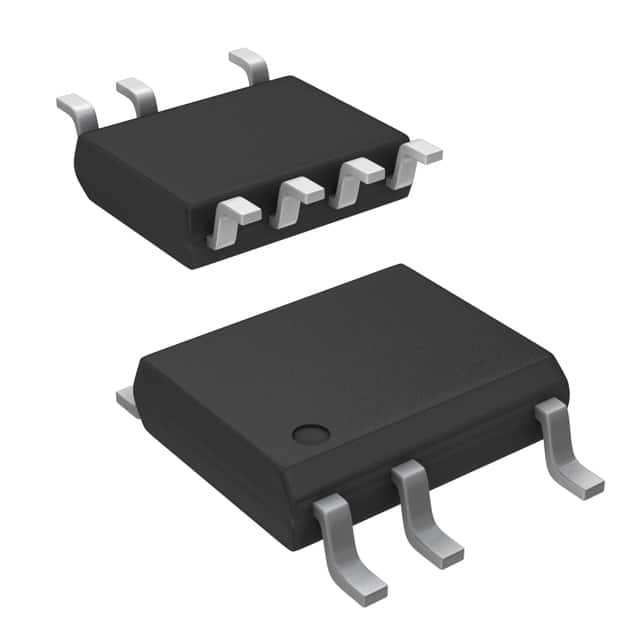
-
LNK304DN-TL Power Integrations
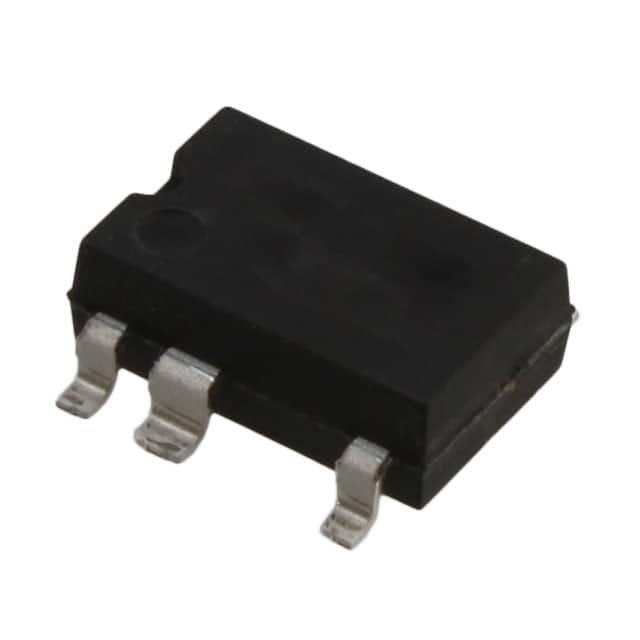
-
LNK304GN-TL Power Integrations
-
LNK304DG-TL Power Integrations
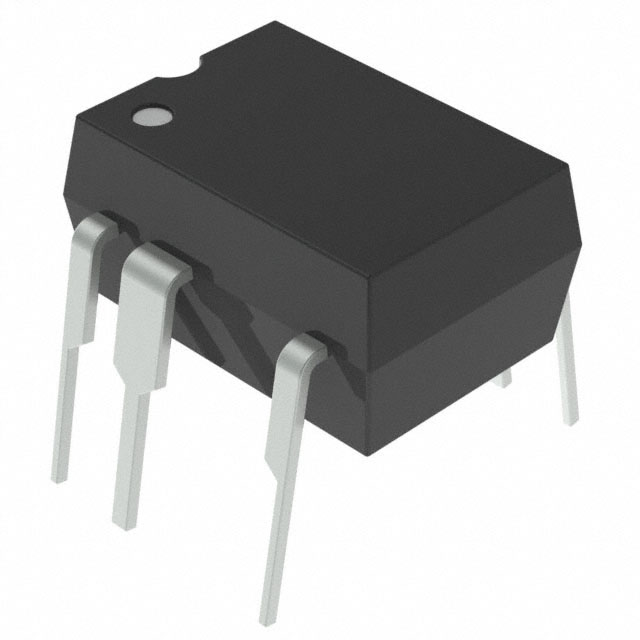
-
TNY277PN Power Integrations
-
TNY276PN Power Integrations
-
TNY278PN Power Integrations
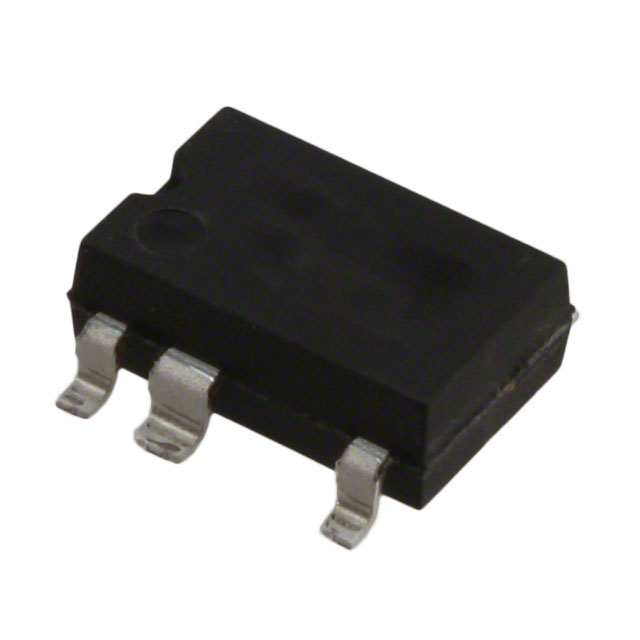
-
TNY278GN-TL Power Integrations
-
TNY280GN-TL Power Integrations
-
TOP266KG-TL Power Integrations
-
TOP258PN Power Integrations
-
TOP253PN Power Integrations
-
TOP253PNAU Power Integrations

- 1500+ Daily average RFQ Volume

- 20,000.000 Standard Product Unit

- 1800+ Worldwide Manufacturers

- 15,000+ In-stock Warehouse